Parenting
When Siblings Fight: What's Really Going On
Sibling fights are not just about toys or attention. Understanding what is really driving rivalry helps parents respond with connection instead of frustration.
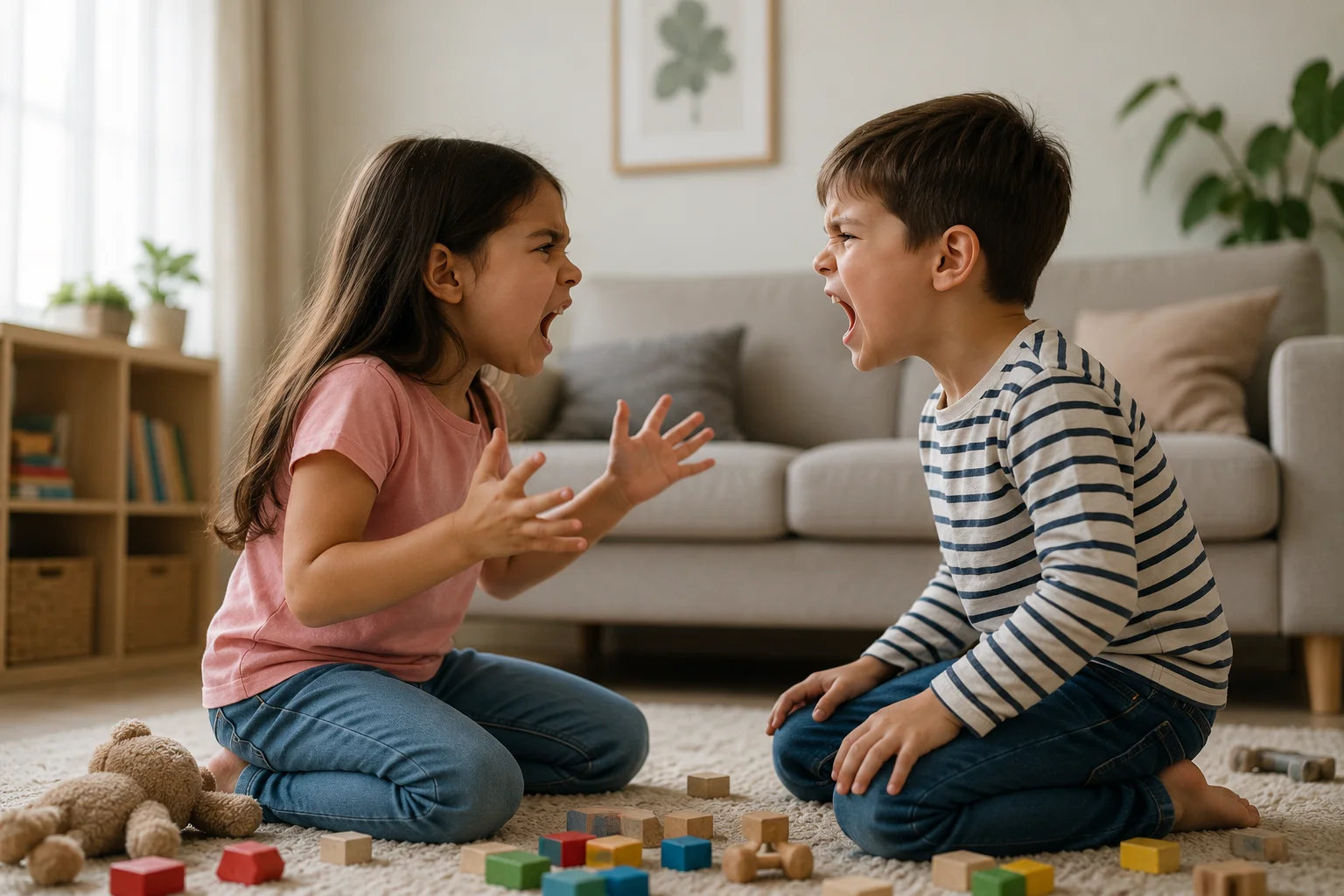
Sibling fighting is not a sign that you are failing as a parent. It is a sign that your children are learning how to navigate difference, power, and connection, and they need your help to do it without hurting each other. What looks like rivalry is usually something deeper, and once you understand what is underneath, the fights stop feeling so personal. Anyone who has spent time around young siblings knows the particular kind of exhaustion that comes with sibling conflict. The sound of two children screaming at each other over a plastic toy that neither of them has played with in months. It is relentless. It is loud. And it can make you question everything you thought you knew about your parenting. But before you go down that spiral, let me tell you something that might surprise you. The fighting itself is not the problem. It is what happens underneath the fighting that matters, and that is where your influence is strongest.
What I Learned the Hard Way
I will be honest. The first time I watched an older sibling hit a younger one over a toy, I froze. Not because it was violent, but because I had spent years studying child psychology and in that moment, watching a parent scramble to respond, it struck me how differently theory and reality operate. The parent reacted the way most do. She said “share!” and separated them. Then she sat in the kitchen wondering why all her knowledge disappeared the moment it was her own child.
That was when I realized something important. Knowing the theory and living the reality are two very different things. And the gap between them is where most parents live, feeling guilty that they are not handling it the “right” way. I think about this gap a lot, especially in conversations I have had through my work in mental health awareness and community building, where parents come feeling like they should have this figured out by now. They have read the books. They have followed the accounts. They know the terminology. But when their three year old launches a block at their five year old’s head because the five year old looked at them wrong, all of that knowledge feels impossibly far away.
The fights that upset us the most are usually the ones that trigger something unresolved in ourselves.
What stands out from the research and from what I have observed through my work in mental health awareness is that parents are often exhausted, saying their kids fight all day. When you slow down and look at the pattern, it usually is not about the toy or the turn or the screen time. It is about something the child does not have the words for yet. A parent once shared in a community discussion how her children had a daily battle over who got to sit in the front of the cart at the grocery store. It sounds trivial, and to the parent it felt trivial, which is why she kept dismissing it. But on closer reflection, it became clear that the older child had just started kindergarten and was coming home every day feeling like the baby of the family was getting all the attention while she was away. The cart fight was not about the cart. It was about a child trying to reclaim a spot that made her feel important.
This is what I want you to hold onto as you read the rest of this. The behavior you see is the tip of the iceberg. The feelings underneath are almost always about belonging, significance, and emotional safety. When you start looking for those instead of just reacting to the noise, everything shifts.
What Sibling Rivalry Actually Is
Research on sibling dynamics shows that conflict between siblings is one of the most common and most studied aspects of family life. A study published in the Journal of Youth and Adolescence examined the bidirectional relationship between sibling warmth, conflict, rivalry, and depressive symptoms in adolescents. The findings were clear: sibling conflict and rivalry are not just normal, they follow predictable patterns that shift based on family dynamics. The research also highlighted something that many parents do not realize, which is that sibling warmth acts as a protective factor. When siblings have moments of genuine connection and affection, even amid conflict, it buffers against the negative mental health effects that rivalry can produce. This means that helping your children build positive shared moments is just as important as managing the fights.
Here is what most parents get wrong. We think the fighting is the problem. But the fighting is the symptom. The actual drivers are usually:
1. Competition for resources and attention
Children are wired to monitor fairness. When one child perceives that the other is getting more attention, more praise, or more leniency, the response is often to act out. This is not selfishness. It is survival instinct. From an evolutionary perspective, securing parental investment is literally a matter of survival, and that programming does not switch off just because your child is safe and fed. What I have learned from studying child development is that this shows up in ways that parents almost never connect to the root cause. A child who suddenly starts refusing to eat dinner, or who starts having tantrums at bedtime right after a new sibling arrives, or who becomes overly clingy right when the older sibling starts getting praise for school achievements. These are all expressions of the same underlying question: “Do I still matter to you?”
In families I have observed, the fighting almost always spikes around transitions. The start of the school year, after a family trip, after a stretch where one child had more one-on-one time with a parent for some logistical reason. Once parents start tracking the timing, they can almost predict the flare-ups. It is not because children are trying to be difficult. It is because the perceived balance of attention has shifted, and their nervous systems are reacting to that shift before their brains can articulate it.
2. Identity differentiation
Siblings often fight as a way of establishing who they are. If one child is “the smart one,” the other might unconsciously pick a different niche, sometimes the opposite one. The fighting becomes a way of saying “I am not you.” This is especially intense when children are close in age or when parents, often without realizing it, label their children.
Through my training in psychology, I have come to understand that this dynamic is especially common in families with two children of the same gender close in age. One becomes the responsible one, the other becomes the free spirit. One is the peacemaker, the other is the one who pushes back. These roles feel natural to the children, and parents often reinforce them without meaning to. “She is my easy one.” “He is my wild one.” These labels seem harmless, even affectionate. But to a child, a label becomes a box. And if the box feels too small, or if the sibling’s box seems more desirable, the friction begins.
The research supports this. Children develop their sense of self partly in relation to their siblings, not just in relation to their parents. This means that sibling conflict is often a healthy, if exhausting, part of identity formation. The goal is not to prevent it but to make sure it does not become destructive.
3. Emotional dysregulation
Children do not have fully developed prefrontal cortices. Their ability to manage frustration, disappointment, and jealousy is still under construction. When a sibling takes their toy or gets more dessert, the emotional flood is real. They are not being difficult. They are being children with brains that are still learning to regulate.
This is where developmental context matters so much. A four year old does not have the neurological capacity to think “My sister got a bigger piece because she is older and needs more food” and calmly accept it. What they have is a feeling that something is unfair and a body that wants to react. The prefrontal cortex, which handles reasoning and impulse control, is not fully developed until the mid-twenties. So expecting a young child to share, take turns, and manage disappointment without help is expecting something their brain literally cannot do yet.
This does not mean you give up on teaching these skills. It means you teach them with the understanding that your child is in a multi-year learning process, not a single lesson. The fighting you see today is part of a much longer arc of development.
The Favoritism Factor Nobody Wants to Talk About
This is the part where most parenting articles get vague. I am going to be direct.
Research confirms that perceived parental favoritism is one of the strongest predictors of sibling rivalry. That study in the Journal of Youth and Adolescence found that favoritism mediates the relationship between sibling conflict and depressive symptoms. In other words, when children perceive that a parent favors one over the other, it does not just cause fighting. It causes lasting mental health effects. This is not a small finding. It means that the way children interpret our parenting decisions has a direct impact on their emotional wellbeing, not just on their sibling relationship.
I know what you are thinking. “I do not have a favorite.” Maybe you do not. But favoritism is not about who you love more. It is about patterns your children notice:
- Who do you praise more often?
- Whose mistakes do you correct more gently?
- Whose achievements do you celebrate more publicly?
- Who gets more flexibility with rules?
- Who do you tend to side with when you hear conflicting stories?
- Whose emotional needs do you respond to more quickly?
These are hard questions. But they matter because your children are tracking them, and their behavior toward each other reflects what they see. A child who consistently feels like the less favored one does not just direct anger at the favored sibling. They often internalize the message that they are less worthy, and this can show up as anxiety, withdrawal, or increased aggression.
Through my training in psychology and my work in community building, I have observed this play out in subtle ways. In one example shared during a community discussion, a family had two children, and the older one was naturally more verbal and articulate. The parents found themselves deferring to her version of events during conflicts because she could explain what happened more clearly. The younger child, who was still developing his language skills, started acting out more aggressively. When the pattern was examined more closely, it became clear that he had learned that his voice did not carry the same weight in the family. His aggression was a communication, not a behavior problem.
Children do not need perfect fairness. They need to feel seen for who they are, not compared to who their sibling is.
This distinction matters. Fairness does not mean sameness. It means meeting each child where they are. Your introverted child might need quiet time with you after school while your extroverted child needs to talk through their day immediately. Meeting both needs is fair, even though it looks different. The problem arises when children perceive that one way of being is valued more than the other.
When It Is More Than Rivalry
There is a line between normal sibling conflict and something more serious, and parents often miss it because the escalation is gradual. You do not wake up one morning to a serious problem. It builds slowly, and because you are in it every day, the shifts can be hard to detect.
Research on sibling abuse published in the Journal of Interpersonal Violence examines the link between sibling abuse, attachment, and social provisions. The findings are sobering. What parents dismiss as “kids being kids” can sometimes be a pattern of one-sided aggression that has long-term consequences for attachment and interpersonal functioning. The study highlights how sibling abuse can disrupt a child’s ability to form secure attachments later in life, affecting their relationships well into adulthood. This is not about making parents panic. It is about giving you the information you need to recognize when something has moved beyond normal developmental conflict.
Here are signs that sibling conflict has crossed into territory that needs professional attention:
- One child is consistently the aggressor and the other is consistently the victim
- Fights involve deliberate humiliation, not just physical pushing
- A child shows fear of their sibling that goes beyond momentary anger
- The aggression is escalating in frequency or severity over time
- One child becomes withdrawn, anxious, or depressed in ways connected to sibling interactions
- The conflict happens even when you are not present, and the victim child tries to avoid being alone with the sibling
- You notice patterns of controlling behavior, such as one child dictating what the other can play with, who they can talk to, or where they can go
This does not mean every fight is a red flag. Most sibling conflict is developmentally appropriate and resolves with guidance. Siblings will argue. They will push each other. They will say things they do not mean. The key distinction is balance. In healthy sibling conflict, both children have power at different times. Both initiate and both back down. Both express anger and both receive apologies. When the power becomes consistently one-sided, that is when you need to pay closer attention. You can read more about when your child’s anger scares you for additional signs that emotional regulation needs support.
What Actually Helps: Strategies From Practice
I am not going to give you a numbered framework with a neat bow. What I will share is what I have seen work, both through my training in psychology and my work in community building, backed by what the research tells us. These are not quick fixes. They are shifts in approach that compound over time.
Slow Down Before You Step In
When the screaming starts, your nervous system reacts too. You feel the urge to fix it immediately. But rushing in with a solution often escalates things because children can sense your anxiety and it adds to their dysregulation. Your body language, your tone, the speed at which you enter the room, all of it communicates something to your children before you say a single word. When you enter a conflict scene with urgency, their bodies read it as “this is an emergency,” which only increases the emotional charge.
Take a breath. Observe for a moment. Is someone being hurt? Is this a pattern or a one-off? Your calm is the most powerful tool you have, and staying calm and patient as a parent is something that takes practice, not just willpower. In my conversations with parents through my work in community building, I have heard that even three seconds of breathing before walking into the room can change the entire trajectory of the interaction. Sometimes that pause also gives the children a moment to start resolving it themselves, which is a skill they need to develop.
Name the Feeling, Not Just the Behavior
When you do step in, try saying “I can see you are really frustrated that your brother took that” instead of “Stop fighting.” When you name the emotion, you help the child build the vocabulary they are missing. Over time, this is what reduces the fighting. Not consequences, but emotional literacy.
Research shows that children who can identify and articulate their emotions are better equipped to resolve conflicts without aggression. This is a skill, and it develops through practice, not through being told to “use your words” in the heat of the moment. The key is that you are doing this work during the conflict, when the emotion is present and the child can connect the word to the feeling in their body. Over time, they start to use those words themselves, and the physical aggression decreases because they have an alternative way to express what they feel.
Through my work in community building, I have heard parents describe this working in real time. One parent shared in a discussion how her older child used to grab things from the younger one whenever he felt overlooked. Once she started naming it, “You are feeling left out right now because I was reading to him,” something shifted. He still felt the feeling, but he started coming to her with words instead of grabbing. Not every time. Not perfectly. But enough that she could see the pattern changing.
Check Your Own Patterns
This is the uncomfortable one. If your children are fighting in ways that feel familiar, look at your own family of origin. Did you and your sibling fight this way? Did your parents handle it in ways that you are now unconsciously repeating?
I am not saying this to make you feel guilty. I am saying it because awareness is the first step toward change. When parents I have spoken with through my community building work notice themselves reacting to their kids the way their own parents reacted to them and their siblings, the shift begins. They have to consciously choose a different response. It is not easy, but it changes the dynamic. Many parents grew up with a parent who picked a side and enforced it. They find themselves doing the same thing, automatically siding with whoever seems more wronged without listening to both perspectives. Once they see it, they can change it. But they have to see it first.
Take a moment to reflect on what you saw growing up. Did conflict get shut down? Was it ignored? Was one child always blamed? Did your parents compare you to your sibling? These patterns run deep, and they show up in our parenting whether we want them to or not.
Create Individual Connection Time
One of the most effective strategies for reducing sibling rivalry is also the simplest: spend individual time with each child. Even 15 minutes a day of undivided attention, where they choose the activity and you are fully present, can significantly reduce competitive behavior. I am not talking about sitting near them while checking your phone. I am talking about being fully engaged, phone in another room, making eye contact, following their lead.
When children feel securely attached to their parent as individuals, not just as part of a sibling unit, the urgency to compete diminishes. They do not need to fight for your attention because they already have it. This is backed by attachment research, which shows that secure individual attachment relationships are a stronger predictor of child wellbeing than overall family functioning scores. In other words, your one-on-one relationship with each child matters more than how the family operates as a group.
Many parents I have connected with through my community work call this “special time.” Each child gets 15 minutes with one parent, and the child decides what they do. Sometimes it is building with blocks. Sometimes it is reading. Sometimes it is just talking about their day. The activity does not matter as much as the consistency and the undivided attention. When parents miss a few days, they can almost always tell because the fighting increases. It is that direct.
When to Get Help
There is no shame in needing support. If sibling conflict is causing distress in your home, affecting your children’s mood or behavior, or creating tension between you and your partner about how to handle it, that is a signal worth listening to. I want to normalize this, because I think parents wait too long to seek help. You do not need to be in crisis to benefit from support. In fact, the earlier you get guidance, the more effective it is.
At Crink, we believe that parenting support should not be episodic. You should not have to wait until things are crisis-level to get help. This is where our AI-native approach makes a difference. Cri, our AI coach, works alongside licensed psychologists to provide between-session support. So when your children fight on a Tuesday and your appointment is on Friday, you are not alone in navigating it. The support is continuous, not just a weekly check-in. Cri can help you identify patterns in the fighting, suggest in-the-moment strategies, and help you reflect on what might be underneath the behavior. It is like having a child development expert in your pocket who has context about your family and your specific challenges.
You can also explore more about when your child won’t listen and children’s mental health in peer relationships for related strategies. Sometimes the sibling dynamic is connected to broader social and emotional patterns, and looking at the bigger picture can give you insights that focusing only on the sibling relationship misses.
What I Want You to Take Away
Sibling fighting is not a parenting failure. It is a developmental process. Your job is not to eliminate it but to guide your children through it with connection and awareness. The fighting will happen. The goal is not zero conflict. The goal is conflict that teaches rather than damages, and that requires your presence, not your perfection.
The next time your children fight, try to remember: the behavior you see is not the whole story. Underneath the yelling and the grabbing is a child who is learning to manage big feelings in a world they cannot control. Your response, when it comes from understanding rather than frustration, is what teaches them how to do that. Every conflict is an opportunity to teach emotional vocabulary, to model regulation, and to show your children that their feelings make sense even when their behavior needs to change.
And if you mess up, which you will, because we all do, repair is more important than perfection. A parent who says “I lost my temper and I am sorry” teaches more about emotional regulation than one who never shows emotion at all. Repair is where the deepest learning happens, for you and for your children. It teaches them that relationships survive conflict, that mistakes are not catastrophic, and that taking responsibility for your actions is a sign of strength. Those lessons, learned in the context of sibling fighting and parental repair, will shape how your children handle conflict in every relationship they have for the rest of their lives.
FAQ
Frequently Asked Questions
Is sibling rivalry normal?
Yes, sibling conflict is one of the most common concerns parents bring to psychologists. Research shows that sibling warmth, conflict, and rivalry exist on a spectrum and can fluctuate over time. Some level of conflict is developmentally normal, but chronic, intense rivalry that includes aggression or parental favoritism can have lasting effects on mental health.
At what age does sibling rivalry peak?
Research suggests that sibling conflict tends to peak during adolescence, when identity formation and competition for parental attention intensify. However, rivalry can emerge as early as toddlerhood when a new sibling arrives, and patterns established early can persist into adulthood if not addressed.
Should parents intervene in every sibling fight?
No. Research on sibling dynamics suggests that allowing children to navigate minor conflicts on their own builds problem-solving skills. However, parents should intervene when fights become physical, emotionally damaging, or involve persistent one-sided aggression. The goal is guided autonomy, not either total non-intervention or constant policing.
Does parental favoritism cause sibling rivalry?
Research confirms that perceived parental favoritism is a significant factor in sibling rivalry. One study found that favoritism mediates the relationship between sibling conflict and depressive symptoms in adolescents. Being mindful of how attention, praise, and resources are distributed helps reduce rivalry triggers.
Can sibling rivalry lead to long-term psychological effects?
Research indicates that chronic sibling conflict and perceived favoritism are associated with depressive symptoms, lower self-esteem, and difficulties in peer relationships. In severe cases, what appears as rivalry may actually be sibling abuse, which research links to attachment difficulties and long-term interpersonal challenges. Early intervention is key.
Updated on July 4, 2026