
Parenting
Signs Your Child Is Struggling Emotionally
Age-by-age signs your child is struggling emotionally, from toddlers to teens, plus real reassurance for the worried, guilty, helpless parent watching it happen.
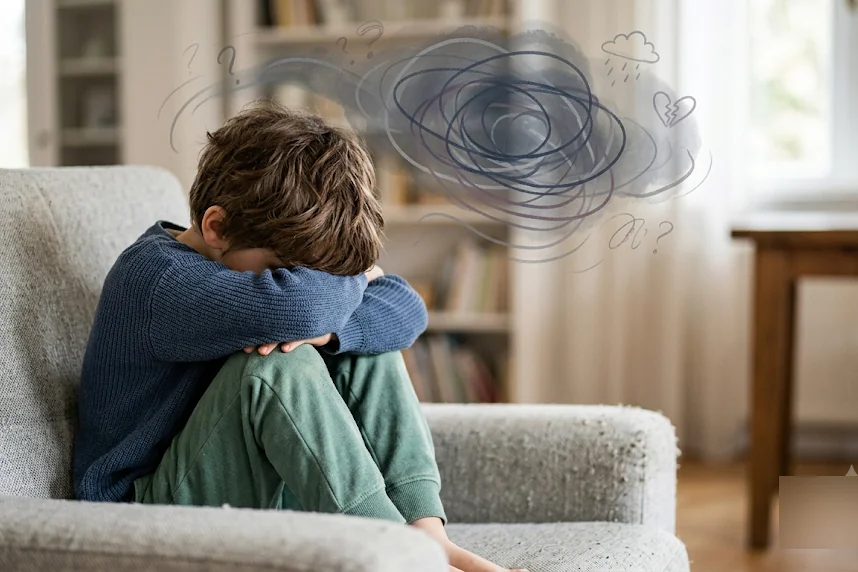
Emotional struggle in children rarely shows up as a child calmly saying “I feel sad.” More often it arrives as a change: a sudden clinginess, a slipping grade, a temper that flares over nothing, a stomach that aches every school morning. For most children, behaviour is the language of distress, and the earliest sign a parent notices is often a gut feeling that something is off.
That gut feeling deserves more credit than it usually gets. In clinical work, one of the most reliable early indicators is not a checklist item at all, but a parent quietly saying, “I can’t put my finger on it, but they’re not themselves.” There is good reason to trust that instinct.
The counterintuitive part: your worry is data, not overreaction
Parents are often told they are “reading too much into it.” The evidence suggests the opposite. In fact, research on parents finds that a parent’s own worry is itself a meaningful signal, closely tied to their child’s emotional and behavioural difficulties.
In other words, the anxiety you feel while watching your child is not noise to be filtered out. It is information. You know your child’s baseline better than any professional ever will, and a shift away from that baseline is exactly what we look for.
So before we walk through the age-by-age signs, hold onto this: noticing is not overreacting. It is the first and most important thing a tuned-in parent does.
Why the signs look so different at each age
A three-year-old and a fourteen-year-old are both capable of real emotional pain, but they express it through completely different behaviour. Younger children lack the words and the self-awareness to name feelings, so distress leaks out through their bodies and routines. Teenagers have the words but often the strongest reasons to hide them.
Because of this, the same underlying feeling, say, anxiety, can look like tantrums in a toddler, tummy aches in an eight-year-old, and irritability or withdrawal in a teen. Matching the sign to the developmental stage is what keeps parents from missing it.
Toddlers and preschoolers (roughly ages 2 to 5)
At this age, emotions are almost entirely physical and behavioural. Look for:
- Regression. Slipping back to earlier behaviours, such as bedwetting after being dry, baby talk, or wanting to be carried again.
- Intense clinginess. Distress at separations that used to be manageable, or shadowing you around the house.
- Tantrums beyond the usual. Meltdowns that are more frequent, longer, or harder to settle than what is typical for their temperament.
- Sleep and appetite changes. Trouble falling asleep, night waking, nightmares, or eating noticeably more or less.
- Tummy aches and other physical complaints. Real, felt discomfort with no medical cause, often before daycare or a change in routine.
A young child cannot say “the new baby makes me feel invisible.” They show it. The behaviour is the message.
Primary and school-age children (roughly ages 6 to 11)
Now social life and school become central, and distress often shows up there first:
- School refusal or reluctance. Dragging their feet, complaining of feeling sick on school days, or begging to stay home.
- Irritability and a short fuse. Snapping, crying easily, or seeming grumpy in a way that is new for them.
- Withdrawal from friends. Pulling back from playdates or activities they used to enjoy.
- Physical complaints. Recurrent headaches or stomach aches, especially tied to specific situations.
- A drop in schoolwork or focus. Falling behind, forgetting things, or losing motivation without an obvious reason.
Children this age often will not volunteer what happened. If you have ever felt shut out at pickup time, it can help to understand why a child often will not tell you about their day, and how much is going on beneath a shrug.
Teenagers (roughly ages 12 and up)
Adolescence brings genuine moodiness, so the task here is spotting the difference between normal ups and downs and something heavier. Watch for:
- Persistent withdrawal. Retreating from family and friends, not just wanting privacy but disappearing into isolation.
- Marked mood shifts. Sadness, anger, or flatness that lingers for weeks rather than passing in a day.
- Sleep changes. Sleeping far too much or too little, or a completely reversed schedule.
- Loss of interest. Dropping hobbies, sports, or friendships that used to matter to them.
- Risk-taking. New or escalating patterns around substances, reckless behaviour, or self-harm.
- Talk of hopelessness. Any comment suggesting they feel trapped, worthless, or that things would be better without them.
Because teen distress hides so well behind ordinary adolescent behaviour, it is worth learning the specific warning signs of low mood in teenagers so you can tell a rough week apart from a real dip. Any talk of hopelessness or self-harm is not a phase to wait out; it needs a response now.
When it is anxiety wearing a disguise
Take the Free Parenting Checklist
Across all ages, anxiety is one of the great imitators. It can look like defiance, avoidance, perfectionism, physical illness, or clinginess, and it rarely announces itself. If your child seems on edge more often than not, it helps to look closely at what is really going on when a child seems constantly anxious, because the behaviour on the surface often points to a worry underneath.
The pattern to notice is not a single bad day but a change that persists and starts to interfere with sleep, school, friendships, or family life. Duration and disruption are the two things clinicians weigh most.
Now, the part nobody puts in the checklist: how you are doing
Most lists tell you what to look for in your child and then stop. But if you are reading this, you are almost certainly carrying something too, and that matters, both for you and for your child.
The fear
Watching your child struggle can feel like a slow-motion emergency you cannot switch off. That fear is love with nowhere to go. It does not mean you are catastrophising. It means you are paying attention, which, as we have seen, is exactly what helps.
The guilt and self-blame
Almost every parent I work with eventually asks some version of “Did I cause this?” It is one of the most common and painful questions in the room. The honest answer is that children’s difficulties are shaped by temperament, biology, friendships, school, and countless things outside any single parent’s control.
What the evidence emphasises is not blame but influence. Research on early-life adversity finds that steady, supportive relationships lower a child’s later risk of depression and anxiety. Your relationship is a protective factor, not the thing that broke your child.
That said, your own wellbeing genuinely does matter here. Research reviewing children whose parents struggled with depression and anxiety shows how closely a parent’s emotional state is connected to their child’s development. This is not another thing to feel guilty about; it is a reason to let yourself be supported too, because looking after your own mind is part of looking after theirs.
The helplessness
Many parents feel they should be able to fix the feeling, and feel useless when they cannot. Here is what actually helps: you do not need to have all the answers. You do not need the perfect words.
What children absorb, especially in distress, is your steady presence. A calm parent who stays close, listens without rushing to solve, and keeps the ordinary rhythms of the day going is doing something powerful, even when it looks like “just being there.”
Small, steady things that help more than the perfect speech
When you are not sure what to do, return to these:
- Name what you see, gently. Try “You’ve seemed quieter this week, and I’m here whenever you want to talk,” rather than an interrogation.
- Protect the basics. Sleep, food, and predictable routines regulate a child’s nervous system more than any single conversation.
- Listen longer than feels comfortable. Let silences sit. Children often say the important thing after the small talk.
- Stay regulated yourself. Your calm becomes their calm. If you need a moment first, take it.
- Keep connection ordinary. A walk, a shared snack, sitting nearby while they draw or game. Connection does not require a serious talk.
When to bring in professional support
Reach out to a doctor, school counsellor, or mental health professional if any of the following are true:
- The changes have lasted more than two to three weeks and are not lifting.
- They are interfering with school, friendships, sleep, or eating.
- Your child mentions self-harm, hopelessness, or not wanting to be here.
- Your instinct keeps telling you something is wrong, even if you cannot explain why.
Seeking help is not a sign you have failed. It is the same instinct that made you read this in the first place, followed one step further. And if you are the one feeling stretched thin, it is entirely reasonable to seek support for yourself as well.
What I want you to carry away
The most useful thing you can hold onto is this: emotional distress in children speaks through behaviour, and it speaks differently at every age. Your job is not to decode it perfectly. It is to notice, to stay close, and to reach for help when the signs persist.
You will not always know the right thing to say. You do not have to. A worried, attentive parent who keeps showing up is, by the evidence and by everything I have seen in practice, one of the strongest protections a struggling child can have.
FAQ
Frequently Asked Questions
What are the signs my child is struggling emotionally?
Look for a persistent change from your child's usual baseline: shifts in sleep or appetite, withdrawal from friends or activities, irritability, physical complaints like tummy aches, and drops in schoolwork. In younger children this often shows as regression, clinginess, or tantrums, while teens may withdraw, take risks, or express hopelessness. Duration and disruption matter more than any single bad day.
How do emotional struggles look different at different ages?
Toddlers and preschoolers usually show distress through their bodies and routines, such as regression, clinginess, sleep changes, and tummy aches. School-age children often display it as school refusal, irritability, withdrawal from friends, and slipping grades. Teenagers tend toward persistent withdrawal, mood shifts, sleep changes, loss of interest, and sometimes risk-taking or talk of hopelessness.
Is it my fault my child is struggling?
Almost every parent asks this, but children's difficulties are shaped by temperament, biology, friendships, school, and many things outside any single parent's control. Your relationship is a protective factor, not the cause. Looking after your own wellbeing helps your child too, so treat that as a reason to accept support rather than another thing to feel guilty about.
When should I get professional help for my child?
Reach out to a doctor, school counsellor, or mental health professional if the changes have lasted more than two to three weeks, are interfering with school, friendships, sleep, or eating, or if your instinct keeps telling you something is wrong. Any mention of self-harm or hopelessness needs a prompt response. Seeking help is a strength, not a failure.
Should I trust my gut if I can't explain why I'm worried?
Yes. Research shows a parent's own worry is closely tied to their child's emotional and behavioural difficulties, so your instinct is meaningful information. You know your child's baseline better than anyone, and a sense that they are not themselves is worth acting on, even when you cannot name the exact reason.
What can I do if I don't know the right thing to say?
You do not need the perfect words. Name gently what you see, protect basics like sleep and routine, listen longer than feels comfortable, and stay calm so your child can borrow that calm. Steady presence and ordinary connection matter more than a perfect conversation.