
Parenting
How to Stop Yelling at Your Kids
You love your kids and still yell. Here is a clear age-by-age guide, plus why parents yell and a practical toolkit to break the cycle and repair.
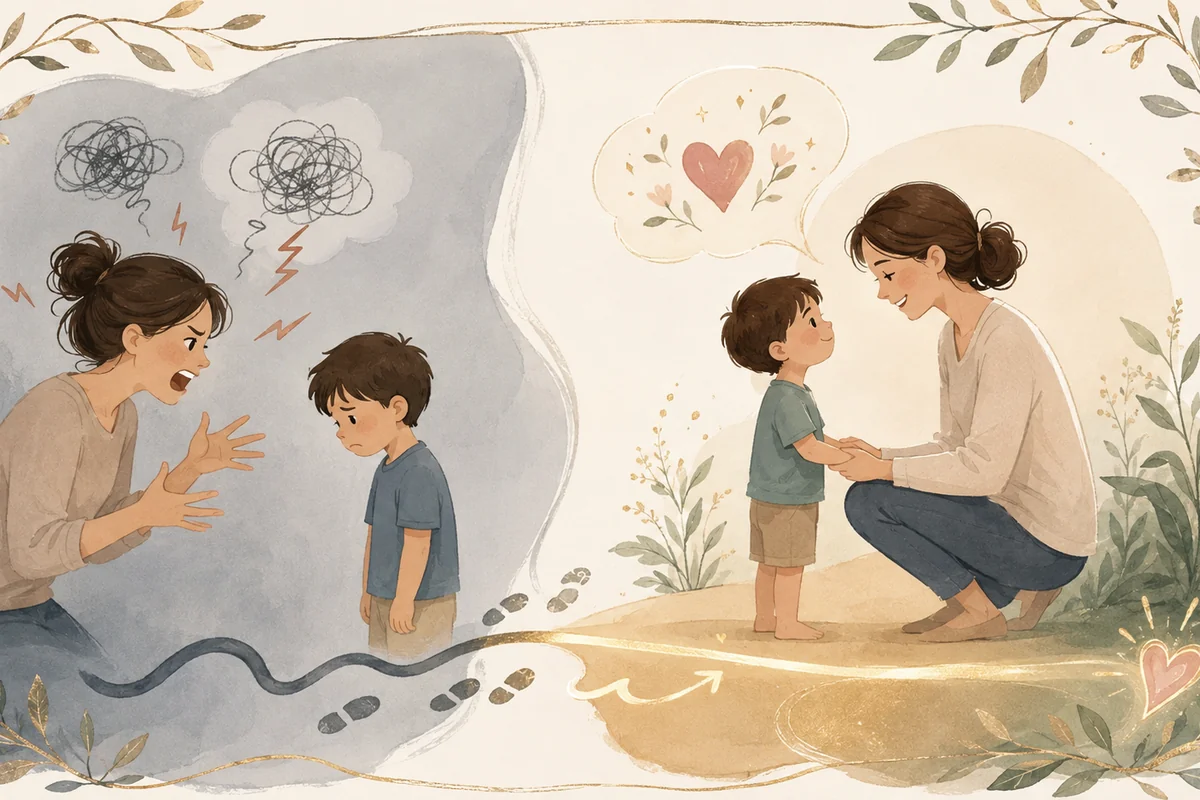
To stop yelling at your kids, you need to interrupt the cycle before it starts: notice your own rising stress, pause and calm your body first, deliberately lower your voice instead of raising it, and repair afterwards. Yelling is a stress reaction, not a character flaw, and it can be unlearned with practice.
Here is the paradox almost every parent lives with. You love your children more than anything, and you still find yourself shouting at them in a way that leaves you ashamed an hour later. Both things are true at once. Loving your kids deeply and yelling at them are not opposites, and understanding why they coexist is the first step to changing it.
What You Think Is Happening Versus What Is Actually Happening
When you yell, the story in your head usually sounds like this: my child is being defiant, they are pushing me on purpose, and raising my voice is the only thing that finally gets through.
What is actually happening is usually different. Your child is often too young, too tired, or too overwhelmed to do what you are asking, and your yelling is landing as fear rather than instruction. The volume gets compliance in the moment because it startles them, not because it teaches them anything.
This matters because if you believe yelling works, you will keep doing it. Once you see what it actually does, the case for a different approach becomes obvious.
Yelling is not a discipline strategy that occasionally fails. It is a stress release that occasionally coincides with your child going quiet, and that quiet is fear, not learning.
Why Parents Yell In The First Place
Parents rarely yell because they think it is the best tool. They yell because they are depleted. Long days, poor sleep, financial worry, and the relentless pace of caregiving leave very little margin, and a small trigger tips an already-full cup.
There is a physiological piece too. When you feel cornered or disrespected, your nervous system reacts before your rational brain catches up. The shout is out of your mouth before you have decided anything.
Some of it is inherited. Many people who yell were yelled at, and under pressure the body reaches for the response it learned early. That is not an excuse, but it does explain why willpower alone rarely fixes it.
Stress is the strongest predictor. In fact, research on thousands of families found that parents under high psychological distress were more likely to shout, and that getting treatment for that distress reduced harsh parenting. That last part is hopeful: the yelling is often downstream of something treatable.
What Yelling Actually Does To Kids
Here the gap between intention and impact is widest. You think you are correcting behaviour. What you are often doing is teaching your child that big feelings are dangerous and that the person meant to keep them safe can become frightening.
The long-term picture is sobering. A body of research following families over time found that harsh verbal discipline like yelling and insults predicted more conduct problems and depressive symptoms in teens, and parental warmth did not cancel out the harm. In other words, being loving most of the time does not neutralise the shouting.
And it does not even work on its own terms. Research reviewed by paediatric experts concludes that yelling and shaming are minimally effective in the short term and not effective in the long term. The tool you reach for to get results is one of the weakest tools available.
The Age-By-Age Guide Nobody Gives You
Most advice on yelling treats a two-year-old and a fourteen-year-old the same way. They are not the same. What is developmentally going on inside your child changes everything about what your yelling does and what you should do instead. Here is the stage-by-stage breakdown.
1. Toddlers (Roughly 1 To 3): Big Feelings, No Brakes Yet
What you think: my toddler is throwing a tantrum to manipulate me or defy me.
What is really going on: your toddler has enormous emotions and almost no ability to control impulses, because the part of the brain that manages that is years away from developing. Tantrums are not misbehaviour. They are a normal stage. Research observing toddlers found that tantrums are a normal part of emotional development, while harsher power-assertive discipline was linked to tantrums getting worse rather than better.
What to do differently: yelling at a toddler mostly scares them, and a scared toddler escalates. Stay physically close, keep your voice low, name the feeling out loud, and wait it out. You are not negotiating with a rational person. You are being a calm anchor while a storm passes.
2. Preschoolers (Roughly 3 To 5): Testing How The World Works
What you think: they know the rule and they are breaking it just to annoy me.
Take the Free Parenting Checklist
What is really going on: preschoolers are running experiments. They push a limit to learn whether it holds, and they are only beginning to grasp cause and effect. Repetition is how they learn, which is why you have to say the same thing many times.
What to do differently: they need calm, consistent limits, not volume. If the rule is the same every time and enforced without a raised voice, they learn it far faster than if you shout it louder each round. Your steadiness is the lesson.
3. School-Age (Roughly 6 To 12): Old Enough To Feel Shame
What you think: they are old enough to know better, so a good yelling will make it stick.
What is really going on: children this age can reason, and they can also feel deep shame. When you yell, they do not just hear the message about the mess or the homework. They hear something about their worth, and they file it away. Yelling at this stage damages trust and models exactly the poor emotional control you are asking them to have.
What to do differently: talk to them. They can genuinely follow logic now. Explain the why, involve them in solutions, and let natural consequences do some of the teaching. Every calm conversation is also a live demonstration of how to handle frustration.
4. Teens (Roughly 13 And Up): Yelling Closes The Door
What you think: if I do not raise my voice, my teen will walk all over me.
What is really going on: yelling at a teenager triggers withdrawal and pushback. They either shut down and stop telling you things, or they meet your volume with their own. Either way, you lose the exact thing you need most in these years, which is an open line of communication.
What to do differently: your influence over a teen runs entirely through the relationship. Protect it. Lower your voice, treat them as someone capable of a real conversation, and pick your battles. The goal is to stay someone they will still talk to when it genuinely matters.
A Practical Toolkit To Break The Cycle
Understanding is not enough on its own. You need a plan you can actually run when your pulse is climbing. Here is a sequence to practise.
-
Spot your triggers before they fire. Notice the specific situations that set you off. Mornings, mealtimes, and the end of the day are common. If you know that snapping at your kids after a long day at work is your pattern, you can plan for that window instead of being ambushed by it.
-
Pause and regulate yourself first. You cannot calm a child while your own nervous system is in alarm. Take a breath, unclench your jaw, and give yourself two seconds before you speak. Working on keeping your own composure amid parenting chaos is not a luxury. It is the mechanism that makes everything else possible.
-
Lower your voice on purpose. This sounds too simple to work, and it is remarkably powerful. Deliberately dropping your volume forces your body to downshift and makes your child lean in to listen. A quiet, firm voice carries more authority than a shout.
-
Repair afterwards, every time. You will still slip. When you do, go back to your child, acknowledge it plainly, and reconnect. This is the single most important habit in this entire post.
Why Repair Matters More Than Being Perfect
Here is what many parents get backwards. They think the goal is to never yell again. The real goal is to become someone who repairs quickly when they do.
A child who sees a parent lose their temper and then come back to say I was frustrated, I raised my voice, and that was not okay, I am sorry, learns something priceless. They learn that relationships survive conflict, that adults take responsibility, and that mistakes are recoverable. That is a better lesson than never seeing you struggle at all.
Repair also protects the bond. It tells your child that the frightening moment was not the whole truth about your relationship. Over time, consistent repair rebuilds the trust that yelling chips away.
Aiming for steadiness matters, and staying calm and patient as a parent is a skill you build rather than a trait you either have or lack. But the repair is what keeps you connected on the days the skill fails you.
You Are Not A Bad Parent For This
Let me name the thing that keeps a lot of parents stuck. The shame after yelling is often so heavy that it becomes its own trigger for the next outburst. You feel like a failure, that feeling adds to your stress, and stress is exactly what makes you yell again.
So let this be clear. Yelling sometimes does not make you a bad parent. It makes you a human being under load. The parents who worry most about their yelling are almost always the ones already doing the reflective work that change requires.
What separates parents who break the cycle from those who do not is not perfection. It is willingness to notice the pattern, to regulate a little sooner each time, and to repair without letting shame swallow the effort. If the yelling feels bigger than you can manage alone, that is a sign to get support, not a verdict on your worth. Change here is genuinely possible, and it usually starts with one calmer pause at a time.
FAQ
Frequently Asked Questions
Why do I keep yelling at my kids even when I do not want to?
Yelling is usually a stress reaction, not a choice you make calmly. When you are depleted or feel cornered, your nervous system fires before your rational brain catches up, so the shout is out before you decide anything. Many parents who yell were also yelled at growing up, so the body reaches for that learned response under pressure. The pattern is common and it can be unlearned with practice.
Does yelling at kids cause long-term damage?
Frequent, harsh yelling can have lasting effects. Studies following families over time have linked harsh verbal discipline to more conduct problems and depressive symptoms in teens, and being warm most of the time does not fully cancel out the harm. An occasional slip that you repair is very different from a steady pattern of shouting. The goal is to reduce the frequency and repair reliably when it does happen.
How do I repair things with my child after I yell?
Go back to your child once you are calm and name what happened plainly, such as I raised my voice and that was not okay, I am sorry. Then reconnect through closeness or a shared moment. Repair teaches your child that relationships survive conflict and that adults take responsibility, which is a valuable lesson in itself. Doing this consistently rebuilds trust over time.
At what age does yelling affect children most?
Yelling affects children at every age, but in different ways. Toddlers and preschoolers are mostly frightened rather than taught, since they lack impulse control and are still learning how the world works. School-age children can feel deep shame, and teens tend to withdraw or push back, which harms the communication you rely on to guide them. There is no age where yelling is an effective teaching tool.
Is it ever okay to raise my voice with my kids?
A raised voice in a genuine safety emergency, like stopping a child from running into traffic, is different from habitual yelling as discipline. The concern is a repeated pattern of shouting to control behaviour. If yelling has become your default, the fix is to spot your triggers, regulate yourself first, and lower your voice deliberately.
What can I do in the moment to stop myself from yelling?
Pause before you speak, take a breath, and unclench your jaw to bring your own nervous system down first. Then deliberately lower your volume rather than raise it, which forces your body to downshift and makes your child more likely to listen. If you know certain times of day set you off, plan ahead for those windows instead of being caught off guard.