Parenting
How to Talk to Your Kids About Divorce
A warm, age-by-age guide to telling your kids about divorce: what to say, what to avoid, and how to protect children from conflict at every stage.
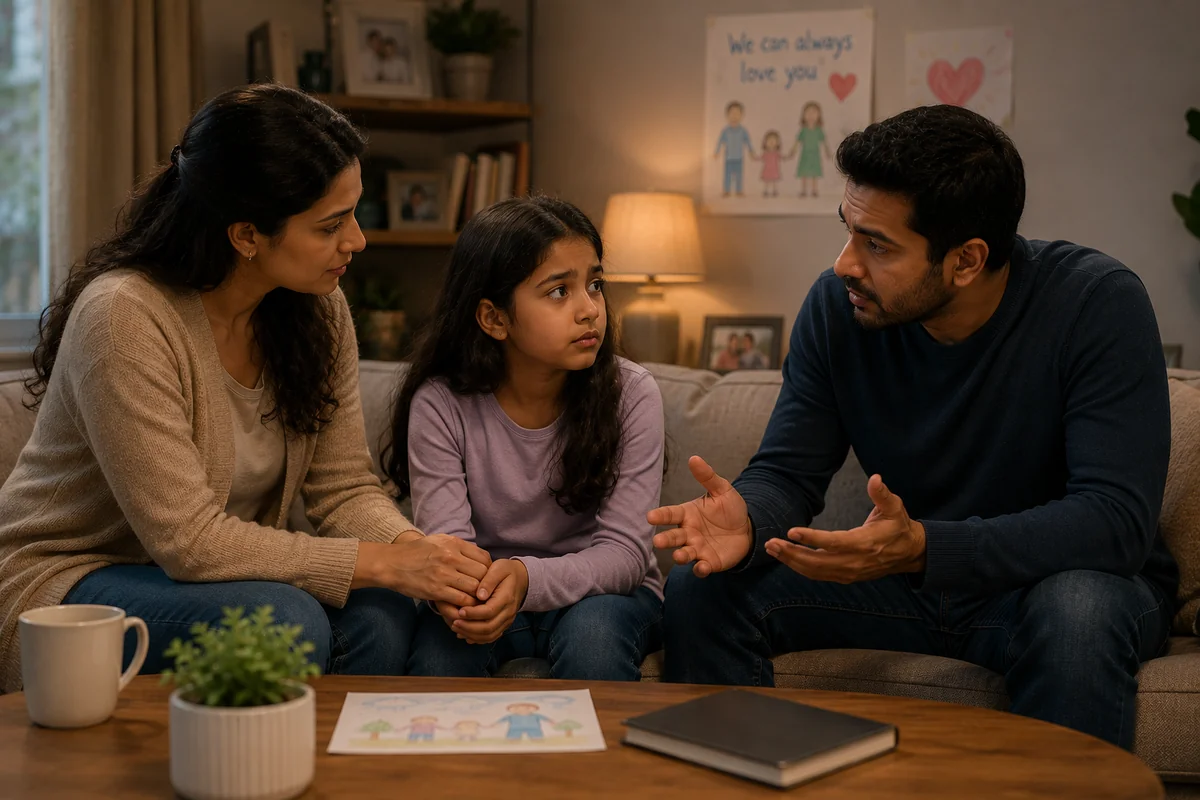
The way you tell your children about a divorce matters more than almost any other part of the process. Choose calm, simple, age-appropriate words, tell them together if you can, make it clear the decision is a grown-up one and not their fault, and return again and again to the truth that both of you still love them.
In my work with families, one pattern stands out over and over. Children rarely remember the exact words parents used on the day they were told. What they carry with them is the feeling in the room, whether they were reassured or frightened, whether they were kept out of the adult conflict or dragged into the middle of it. That is genuinely good news for worried parents, because it means you do not have to find perfect words. You have to offer safety, honesty, and steadiness.
This guide walks through what to say at each age, how to handle the harder situations, and the things that are best left unsaid.
Why how you tell them matters more than the divorce itself
Many parents fear that the divorce itself will damage their children. The evidence points somewhere more hopeful and more specific. In fact, a large review of the research found that what most shapes how children fare is the level of conflict between parents, not the divorce itself.
This reframes your whole task. Your job is not to spare your children the fact of a separation. It is to protect them from being caught in the crossfire of adult conflict.
Children do not need their parents to stay together, and they do not need a flawless conversation. What they need is to be shielded from the fighting, kept out of the middle, and reassured that both of their parents will keep loving and caring for them no matter what changes.
When you hold that goal at the center, the rest of the guidance below becomes much easier to follow.
How do I tell my children in a way that fits their age?
Children understand loss and change very differently depending on their stage of development. Here is an age-by-age breakdown of what they can take in and how to speak to them.
-
Toddlers and preschoolers (roughly 2 to 5). Use very simple, concrete words and keep the focus on daily life. Tell them plainly what will change and what will stay the same: where they will sleep, who will make breakfast, who will pick them up. At this age children often believe a separation is reversible, or that something they did caused it, so repeat gently and often that it is not their fault and that they are deeply loved. Expect them to ask the same questions many times. That repetition is how they process, so answer patiently each time.
-
Early school-age (roughly 6 to 9). Children this age can understand more and deserve an honest but simple reason, without adult detail. Their worries are practical and immediate: Where will I live? Will I change school? Will I still see both of you? Answer these directly and concretely, because uncertainty is frightening for them. Many still quietly blame themselves, so reassure them repeatedly and clearly that grown-up decisions are never a child’s doing.
-
Tweens and teens (roughly 10 and up). Older children want more of the why, and it is fine to give a little more, but they should still not receive adult details. They may respond with anger, withdrawal, or an urge to take sides. Give them explicit permission to love and keep a relationship with both parents, and be careful not to treat them as a confidant or a sounding board for adult grievances. They can handle honesty, but they should never be handed a burden that belongs to the adults.
Across every age, plan to have this conversation more than once. A single talk cannot cover everything, and children will return with new questions as reality settles in.
How do I tell my kids when one parent does not want the divorce?
This is one of the hardest situations, and it is common. One parent has decided to leave and the other wishes things were different. The temptation to let that disagreement show, or to signal to the children who is to blame, can be powerful. Resist it.
For the children, present a calm, united front. This does not mean pretending you agree about everything. It means agreeing on one thing: the message the children hear. Decide together, in advance, what you will say, and keep that message consistent even while the two of you privately disagree.
Do not expose the disagreement to the children, and do not cast one parent as the villain who broke the family. A child who learns that one parent wanted to leave often takes that information and turns it into rejection or blame, which is a heavy thing for a young person to carry.
If presenting a united front in the same room is not possible, agree on the words each of you will use separately so the child hears the same steady story from both.
What should I never say to my child during a divorce?
Some words do lasting harm even when they feel justified in the heat of the moment. Here are the things to keep firmly off the table:
- Do not badmouth the other parent, even indirectly. Children hear criticism of a parent as criticism of half of themselves.
- Do not share adult details such as affairs, money problems, or the specifics of legal fights. These belong to the adults, not the children.
- Do not ask a child to choose sides or to say which parent they prefer.
- Do not use your child as a messenger between the two of you. Passing notes and updates through a child places them squarely in the middle.
- Do not ask them to keep secrets from the other parent. Secrets teach children that love comes with hidden strings.
- Do not lean on your child as your emotional support. It is fine for them to see that you are sad, but they should not become the one holding you up.
The reason these matter so much is well documented. Studies find that children who get caught in the middle, pulled into loyalty conflicts or made to feel the split is their fault, tend to struggle more. Every item on that list is a way a child can end up in the middle, and each one is avoidable.
What do I say when my child asks why we got divorced?
This question will come, often more than once, and often at an inconvenient moment. Prepare a simple answer you can give calmly.
Keep it age-appropriate and honest but simple. Frame it clearly as a grown-up decision. You might say something like, “We have decided we cannot live together as a married couple anymore, and this is a grown-up decision that we made. It is not because of anything you did.” Then always return to the anchor: “We both love you, and that will never change.”
Notice what that answer leaves out. It gives no adult reasons, no blame, and no confusing detail. It gives your child the two things they actually need in that moment: an assurance that they did not cause this, and an assurance that they are still loved by both of you.
If your child pushes for more, it is completely fine to say, “Some of the reasons are grown-up things that are not for you to worry about, but what I can tell you is that we both love you.” Boundaries around adult detail are a form of protection, not dishonesty.
How do I help my child cope in the weeks and months after?
The conversation is the beginning, not the end. Adjustment happens gradually, and steadiness during this stretch is what helps children the most.
Protect them from conflict as fiercely as you can. Keep disagreements, negotiations, and tense conversations away from their ears. Research on divorced families shows that ongoing conflict between parents, and the strain it puts on everyday parenting, is what most affects how children adjust. Keeping day-to-day parenting warm and predictable is one of the strongest protections you can offer.
Keep routines as stable as possible. Familiar bedtimes, meals, and rituals tell a child that the ground beneath them is still solid. If your child has faced loss before, you may notice some overlap with what you learned about talking to your child about death and loss, because divorce carries its own kind of grief for a child.
Stay alert to how they are doing over time. It helps to know the signs your child is struggling emotionally so you can respond early rather than waiting for a crisis.
And through all of it, keep investing in the ordinary moments of connection that make up nurturing your child’s emotional wellness, because those small daily reassurances add up.
Expect that your child’s feelings will not follow a neat timeline. A child may seem fine for weeks and then have a hard patch when a birthday, a holiday, or a first visit to a new home brings the change back into focus.
What I most want parents to hold on to
If you take one thing from this, let it be this: your children can come through a separation as steady, loved young people, and the biggest lever you hold is how you protect them from conflict. You cannot make the situation painless, but you can make it safe.
Speak to them at their level. Keep the adult matters with the adults. Refuse to make them choose. And whenever you are unsure of what to say, come back to the one message that is always true and always enough: this is a grown-up decision, it is not your fault, and we both love you and always will.
Be gentle with yourself, too. Parenting through a separation is hard, and doing it with this much care is already a sign of how much your children matter to you.
FAQ
Frequently Asked Questions
How do I talk to my kids about divorce by age?
For toddlers and preschoolers (roughly 2 to 5), use very simple words, focus on what changes in their daily routine, and reassure them repeatedly that it is not their fault. Early school-age children (6 to 9) need honest but simple reasons and concrete answers about where they will live and school. Tweens and teens (10 and up) want more of the why, but without adult details, and they need permission to love both parents freely.
How do I tell my kids about divorce when my partner does not want to?
Present a calm, united front to the children even when you disagree as adults. Decide together, in advance, on the exact message the children will hear, and keep it consistent. Do not expose the disagreement or cast either parent as the one who broke the family, because a child can easily turn that into blame or a sense of rejection.
What should you not say to a child of divorce?
Do not badmouth the other parent, share adult details like affairs, money, or legal fights, or make your child choose sides. Never use them as a messenger between parents, ask them to keep secrets, or lean on them as your emotional support. Each of these puts a child in the middle, which is exactly what harms them most.
What do I say when my child asks why we got divorced?
Keep it age-appropriate, honest but simple, and framed as a grown-up decision. You can say you have decided you cannot live together anymore and that this is a grown-up choice, not because of anything they did. Always return to the anchor message that you both love them and that will never change, and it is fine to keep the adult reasons private.
How do I know if my child needs extra help coping with the divorce?
Feelings that come and go over time are normal, especially around birthdays, holidays, or a first stay in a new home. Watch for changes that last, such as ongoing sadness, withdrawal, sleep or appetite changes, trouble at school, or persistent self-blame. Learning the signs your child is struggling emotionally helps you respond early, and reaching out to a professional is a wise step if worries persist.
How many times should I have this conversation with my child?
Plan for more than one conversation. A single talk cannot cover everything, and children process change gradually and return with new questions as reality settles in. Younger children in particular may ask the same things repeatedly, and answering patiently each time is part of how they make sense of it.