
Parenting
Childhood Trauma: How Early Experiences Shape a Lifetime
What childhood trauma is, how it affects a developing brain and later mental health, the signs to watch for at every age, and how parents and caregivers can help a child heal.
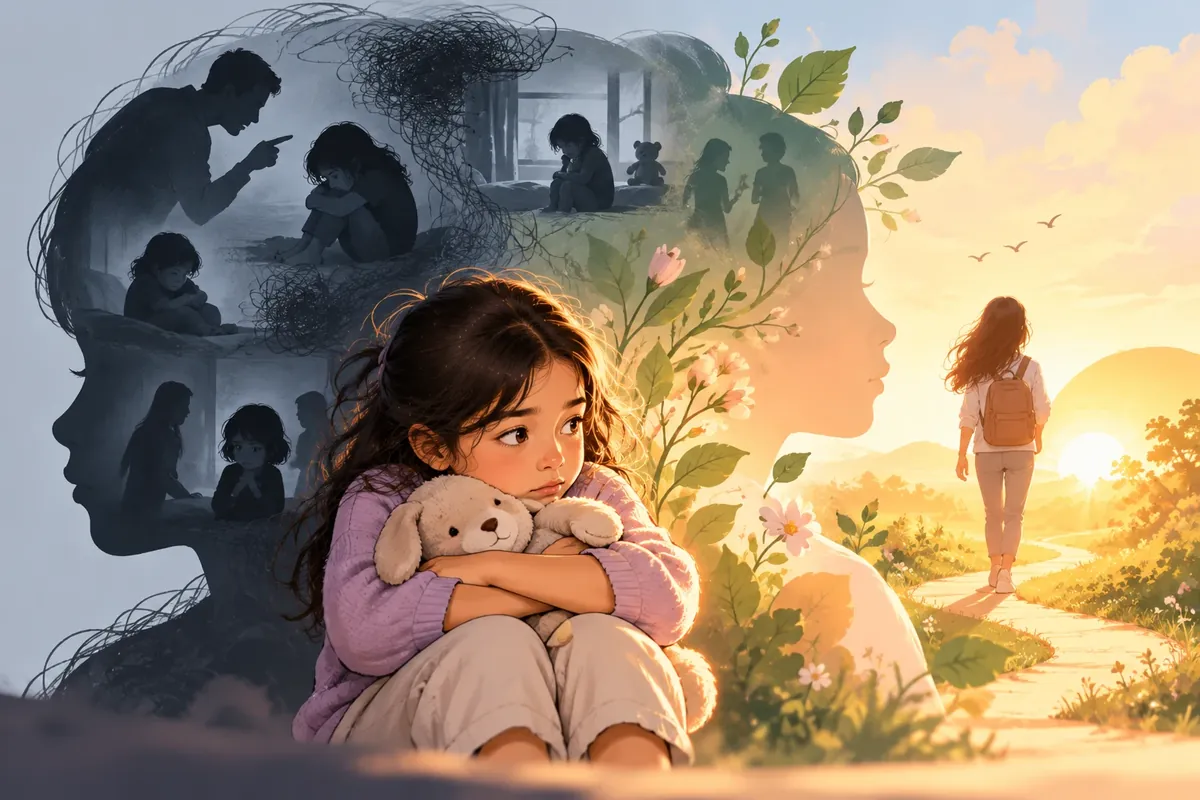
Childhood trauma is any experience that overwhelms a child’s ability to cope and leaves them feeling unsafe, helpless, or alone. It is far more common than most people realise, and its effects can reach well into adulthood, shaping mental health, relationships, and even physical health. The encouraging truth is that children are also remarkably resilient, especially when the adults around them know what to look for.
Most of us carry our childhood with us in ways we rarely notice. The way we react to criticism, how safe we feel in relationships, how we handle stress, even how we sleep at night. Many of these patterns were shaped long before we had words to describe them.
For some children, those early years include experiences that are frightening, overwhelming, or deeply painful. A child may not always show it, and the adults around them may assume they are too young to remember or understand. But the body and the brain do remember.
What is childhood trauma?
What makes an experience traumatic is not only the event itself, but how the child experienced it and whether they had support to make sense of it. Trauma can come from a single event, or it can build slowly through repeated experiences over months or years.
Common sources of childhood trauma include:
- Physical, emotional, or sexual abuse
- Neglect, including emotional neglect
- Witnessing violence at home or in the community
- Losing a parent or caregiver through death, separation, or abandonment
- Living with a caregiver who struggles with addiction or mental illness
- Serious accidents, illness, or medical procedures
- Natural disasters, displacement, or war
- Ongoing bullying or harassment
Researchers call many of these adverse childhood experiences, or ACEs. They are strikingly common. In a large US study published by the Centers for Disease Control and Prevention, 63.9% of adults reported at least one ACE, and 17.3%, roughly one in six, reported four or more.
What happens in a child’s brain?
A child’s brain is still developing, and it learns from everything it experiences. When a child feels safe, the brain can put its energy into growing, exploring, learning, and connecting.
When a child faces repeated or severe stress without enough support, the body’s stress response stays switched on. Researchers call this toxic stress. Over time, it can:
- Keep the amygdala, the brain’s alarm system, on high alert
- Flood the body with stress hormones such as cortisol
- Affect the development of the prefrontal cortex, which supports focus, planning, and emotional control
- Affect the hippocampus, which plays a key role in memory and learning
A review in Nature Reviews Neuroscience describes how maltreatment alters the course of brain development, particularly in the circuits involved in detecting threat, regulating emotion, and anticipating reward.
In simple terms, the brain adapts for survival rather than growth. A child who has learned that the world is unsafe may stay watchful, react quickly to small triggers, or shut down when overwhelmed. These reactions are not bad behaviour. They are the brain trying to protect itself.
Toxic stress can affect the body too, including sleep, digestion, immunity, and long-term heart health.
How does childhood trauma affect mental health later in life?
The effects of childhood trauma do not always fade as a child grows up. Sometimes they stay quiet for years and resurface later, during stress, parenthood, or a major life change.
Research shows a clear pattern: the more adverse experiences a person has in childhood, the higher their risk of difficulties later on. A meta-analysis in The Lancet Public Health, covering 37 studies and more than 250,000 people, found that adults with four or more ACEs were at higher risk across every health outcome studied, with some of the strongest links to mental ill health, problematic alcohol and drug use, and violence, including self-harm.
Those difficulties can include:
- Anxiety and depression
- Post-traumatic stress
- Difficulty trusting others or forming close relationships
- Low self-worth and persistent feelings of shame
- Using substances as a way of coping
- Physical health problems linked to long-term stress
Trauma can also shape how adults parent. A parent who grew up feeling unsafe may find it hard to stay calm when their own child cries or misbehaves. Without support, these patterns can quietly pass from one generation to the next.
Old wounds show up in new relationships. Stress feels harder to handle. Emotions can feel overwhelming without a clear reason.
But a history of trauma is not a life sentence. With the right support, healing is possible at any age.
Which children are most at risk?
Any child can experience trauma, whatever their family background, income, or culture. Some children face a higher risk, including those who:
- Live in homes with domestic violence or frequent conflict
- Have a caregiver struggling with addiction or untreated mental illness
- Have lost a parent or gone through a sudden family separation
- Live through poverty, displacement, or community violence
- Have disabilities or developmental differences, and may find it hard to communicate distress
- Are frequently bullied at school or online (see what to do if your child is being bullied)
Trauma is not always loud or visible. Emotional neglect, where a child’s feelings are consistently ignored or dismissed, can be just as harmful as more obvious events, even though it often goes unnoticed.
What are the signs a child may be struggling?
Children rarely say, “I am traumatised.” Distress usually shows up in their behaviour, their body, and their play, and it looks different at different ages.
| Age | Signs to watch for |
|---|---|
| Young children (under 6) | Frequent tantrums, clinginess, or fear of being separated from caregivers. Returning to earlier behaviours such as bedwetting or thumb-sucking. Nightmares, sleep problems, or repeatedly acting out a frightening event in play. |
| School-age children (6 to 12) | Difficulty concentrating or a sudden drop in school performance. Frequent stomachaches or headaches with no clear medical cause. Irritability, angry outbursts, or withdrawing from friends and activities they used to enjoy. |
| Teenagers | Pulling away from family, risky behaviour, or experimenting with alcohol or drugs. Persistent sadness, numbness, or hopelessness. Self-harm, or talking about not wanting to be alive. |
One sign on its own does not mean a child has experienced trauma. But if several appear together, last for weeks, or follow a difficult event, it is worth paying closer attention. For a fuller guide, see signs your child is struggling emotionally and does my child need therapy?
If a child talks about self-harm or suicide, seek professional help right away. In India, you can call the government’s free Tele MANAS mental health helpline on 14416 or 1-800-891-4416.
How can parents and caregivers help a child heal?
The good news is that children heal in relationships. Research from Harvard’s Center on the Developing Child shows that children who do well despite serious hardship have had at least one stable and committed relationship with a supportive adult. That adult can be a parent, grandparent, teacher, or mentor.
Here are five ways to offer that support.
1. Create a sense of safety
Predictable routines for meals, school, and bedtime help a child’s nervous system settle. Knowing what comes next makes the world feel less uncertain.
2. Stay calm and present
When a child is upset, your calm becomes their calm. Getting down to their eye level, using a gentle voice, and simply staying close can help them feel safe again.
3. Listen without judgment
Let children share at their own pace. Avoid pushing for details, and respond with simple words such as “I believe you” and “It’s not your fault.”
4. Look beneath the behaviour
Anger, defiance, or withdrawal is often a sign of fear or pain. Ask “What is my child trying to tell me?” before “How do I stop this?“
5. Take care of yourself too
Supporting a child through trauma can be exhausting. Parents and caregivers need rest, support, and space to process their own feelings, including any painful memories from their own childhood.
Healing is not about erasing the past
Healing is about helping a child feel safe enough in the present to grow, trust, and thrive.
Children do not need perfect parents. They need adults who notice, who stay, and who are willing to keep learning.
Take a moment today to ask yourself: What is one small way I can help the child in my life feel a little safer?
And if you are worried about your child, or if your own childhood still weighs on you, reaching out for support is a sign of strength, not failure. At Crink, psychologists and the parent mentors in our Parenting Without Frustration programme offer a safe, confidential space for families to understand difficult experiences and build emotional safety together.
FAQ
Frequently Asked Questions
What counts as childhood trauma?
Childhood trauma is any experience that overwhelms a child's ability to cope and leaves them feeling unsafe, helpless, or alone. It can come from a single event, such as an accident or a sudden loss, or build up through repeated experiences such as abuse, neglect, or living with violence at home. What makes it traumatic is not only the event but how the child experienced it and whether they had support.
How common are adverse childhood experiences?
Very common. In a large US study of adults published by the Centers for Disease Control and Prevention, 63.9% reported at least one adverse childhood experience (ACE), and 17.3% reported four or more. The more ACEs a person has had, the higher their risk of mental and physical health difficulties later in life.
Can a child recover from trauma?
Yes. Children are remarkably resilient, especially when they have support. Research from Harvard's Center on the Developing Child shows that children who do well despite serious hardship have had at least one stable, committed relationship with a supportive adult. With safety, caring relationships, and professional help when needed, healing is possible at any age.
What are the signs that a child may have experienced trauma?
Signs vary by age. Young children may become clingy, have tantrums, regress to bedwetting, or have nightmares. School-age children may struggle to concentrate, complain of stomachaches or headaches, or withdraw from friends. Teenagers may pull away, take risks, use alcohol or drugs, or talk about self-harm. One sign alone is not proof of trauma, but several together that last for weeks deserve attention.
When should I get professional help for my child?
Seek help if signs of distress last for weeks, appear together, follow a difficult event, or get in the way of school, friendships, sleep, or family life. If a child talks about self-harm or not wanting to be alive, seek help immediately. In India, you can call the government's Tele MANAS mental health helpline on 14416 at any time.