
Parenting
Exam Season Stress: Is It Your Child's Anxiety or Yours?
How a parent's worry quietly reaches a child during exams, a gentle self-check for parents, words to swap, and calming practices for you and your child.
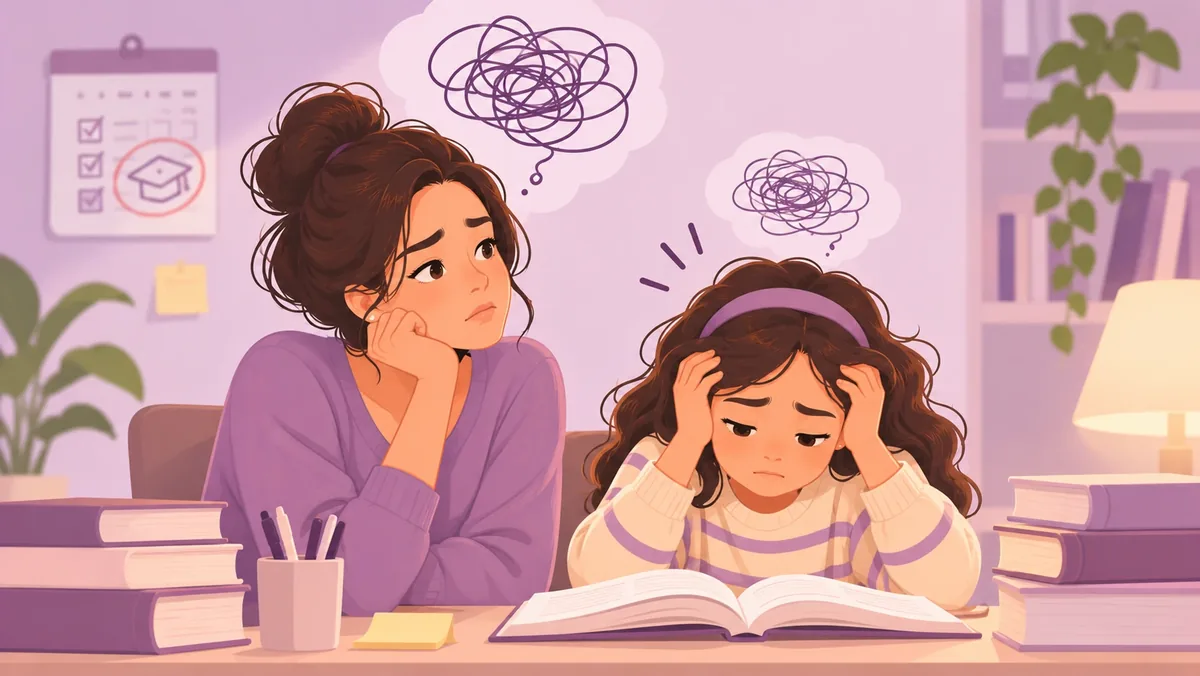
During exam season, a parent’s worry can quietly become a child’s worry. Children read their parents’ faces, tone, and body language to decide whether something is safe, so a tense parent can make an exam feel more threatening. The good news works the same way: when you manage your own anxiety, your calm becomes something your child can borrow.
A familiar scene
It’s 10 p.m., two days before the board exams. A parent walks past their child’s room for the fourth time that evening.
“Have you revised chapter six? Did you finish the sample paper? Your cousin scored 95, you know.”
The child nods, shuts the book, and stares at the page without reading a word.
The parent goes to bed worried. The child goes to bed worried too. But here is a question few of us stop to ask: whose worry is it?
Exam season is stressful for children. It is often just as stressful for parents. And without meaning to, we can hand our anxiety to our children along with our good intentions.
How does a parent’s worry reach a child?
Children are remarkably good at reading their parents. Long before they understand our words, they learn to read our faces, our tone, and our body language. Psychologists call this social referencing: children look to the adults they trust to decide whether a situation is safe or threatening.
Research with young children shows how strong this is. A meta-analysis of 19 studies found that when infants watched a parent react fearfully to something new, they became more fearful and avoidant of it themselves.
So when a parent is tense, a child often concludes that something must be wrong. If Amma or Papa is this worried, the exam must be dangerous. Perhaps I am not ready.
The reverse is also true. Through co-regulation, a calm adult helps a child’s nervous system settle. Children borrow our steadiness long before they learn to create it on their own.
This is why parental anxiety matters so much during exams. It is not that worried parents are bad parents. It is that our emotional state is one of the most powerful signals our children receive.
Is it your anxiety? A gentle self-check
Take a quiet moment and ask yourself honestly:
- Do I check on my child’s studies more to ease my own worry than to help them?
- Do I lose sleep over marks, results, or what relatives will say?
- Do I compare my child’s preparation with other children’s? (Comparisons can sting more than we realise. See signs your child is comparing themselves to a sibling.)
- Is most of our conversation at home about exams and studies right now?
- Do I feel personally judged when my child scores low?
- Am I carrying my own unfinished story about exams, success, or failure?
If you said yes to a few of these, please be kind to yourself. It simply means you care deeply. The goal is not to stop caring. It is to notice your worry, so you can choose what you pass on.
What does your child actually need from you?
During exams, most children already know what is at stake. They don’t need reminders of how important the exam is. They need to feel that they are more important than the exam.
What helps most is a calm presence, a predictable routine, and the reassurance that your love does not depend on their marks. (For more on why steady, unconditional warmth matters, see should hugs be a reward?)
Small changes in language can make a big difference:
| Instead of saying… | Try saying… |
|---|---|
| ”This exam decides your future." | "This exam matters, and it’s one step among many." |
| "Why aren’t you studying?" | "How is your revision going? Need anything?" |
| "Your cousin scored 95." | "I’ve seen how hard you’ve been working." |
| "Don’t be nervous." | "Feeling nervous is normal. Want to take a break together?" |
| "How many marks did you get?" | "How did it feel? What went well?” |
How can parents calm their own exam anxiety?
You cannot pour calm from an empty cup. These practices help you settle first, so your child can borrow your steadiness.
1. Pause before you speak
When worry rises, take three slow breaths before walking into your child’s room. Ask yourself, “Will this comment help them, or just ease my anxiety?“
2. Give your worry somewhere to go
Write your fears down, or share them with your partner or a friend, rather than with your child.
3. Limit comparison triggers
Step back from relatives’ calls or parent groups that discuss marks and rankings, at least during exam weeks.
4. Keep your own routine
Sleep, a short walk, prayer, or quiet time protect your mood, and your child notices.
5. Widen the picture
Remind yourself of people you know who did well in life despite an average exam result. One exam is one chapter, not the whole story.
What calming practices help children (and work best together)?
These are simple, quick, and work for most ages. Doing them together makes them feel like connection rather than another task.
- Balloon breathing. Breathe in slowly through the nose for four counts, as if filling a balloon in the belly, then breathe out for six. Repeat five times before studying or before leaving for the exam.
- 5-4-3-2-1 grounding. When panic rises, name five things you can see, four you can touch, three you can hear, two you can smell, and one you can taste. It brings the mind back to the present.
- Worry time. Set aside ten minutes a day for your child to write or talk about every worry. Outside that time, worries can be “parked” on paper for later.
- Movement breaks. A ten-minute walk, stretch, or dance after every hour of study helps release tension and improves focus.
- A calm exam morning. Wake up a little early, eat a simple breakfast together, and avoid last-minute revision talk. A hug and “I’m proud of you, whatever happens” is the best send-off.
- Protect sleep. A rested brain remembers far more than a tired one. Late-night cramming usually costs more than it gains.
For more ways to support a child who is already stressed, see child stressed about exams? 5 practical ways parents can help.
When should you seek extra support?
Some nervousness before exams is normal and can even help focus. But please consider speaking to a school counsellor or psychologist if your child:
- Has frequent headaches, stomach aches, or sleep problems with no medical cause
- Stops eating properly or withdraws from friends and family
- Has panic attacks or freezes completely during tests
- Talks about feeling worthless, hopeless, or like a burden
If your child ever speaks about harming themselves, seek professional help right away. In India, you can call the government’s free Tele MANAS mental health helpline on 14416 or 1-800-891-4416.
Reaching out early is a sign of care, not failure, for children and parents alike. If you are unsure whether your child needs support, does my child need therapy? can help you decide, and Crink’s psychologists and parent mentors work with families through exactly these seasons.
A question for you
Exams will come and go. What stays with our children is how they felt at home while they faced them.
So this exam season, before asking “How is my child coping?”, try asking, “How am I coping?” Your calm may be the most valuable thing you give them.
Take a moment to reflect: What helps your family stay calm during exams?
Let’s make parenting a space for curiosity, reflection, and learning, not judgment.
FAQ
Frequently Asked Questions
Can a parent's anxiety affect a child during exams?
Yes. Children read their parents' faces, tone, and body language to judge whether a situation is safe. When a parent is visibly tense about exams, a child often concludes that something must be wrong and that they may not be ready. A calm parent, on the other hand, helps a child's nervous system settle.
How do I know if the exam anxiety at home is mine?
Ask yourself honestly: do you check on your child's studies more to ease your own worry than to help them? Do you lose sleep over marks or what relatives will say, compare your child with others, or feel personally judged by their results? If several answers are yes, you care deeply, and it may help to manage your own worry so you can choose what you pass on.
What should I say to my child before an exam?
Keep it warm and simple, and keep last-minute revision talk out of the morning. A hug and 'I'm proud of you, whatever happens' is a powerful send-off. During exam season, swap pressure for support: instead of 'This exam decides your future', try 'This exam matters, and it's one step among many.'
What are quick calming techniques for exam stress?
Try balloon breathing (in for four counts, out for six, five times), the 5-4-3-2-1 grounding exercise, a daily ten-minute 'worry time', and short movement breaks after each hour of study. Doing them together makes them feel like connection rather than another task. Protecting sleep matters too, because a rested brain remembers far more than a tired one.
When should I get professional help for my child's exam stress?
Speak to a school counsellor or psychologist if your child has frequent headaches, stomach aches, or sleep problems with no medical cause, stops eating properly, withdraws from friends and family, has panic attacks or freezes completely in tests, or talks about feeling worthless or hopeless. If your child mentions harming themselves, seek help immediately. In India, Tele MANAS is available free on 14416.