Parenting
Oliver Twist, My Allergies, and Why None of My Kids Get the Easy Version
Why a Crink co-founder gives his kids the hard, slow classics on purpose, and what the science of reading says about patience and empathy.
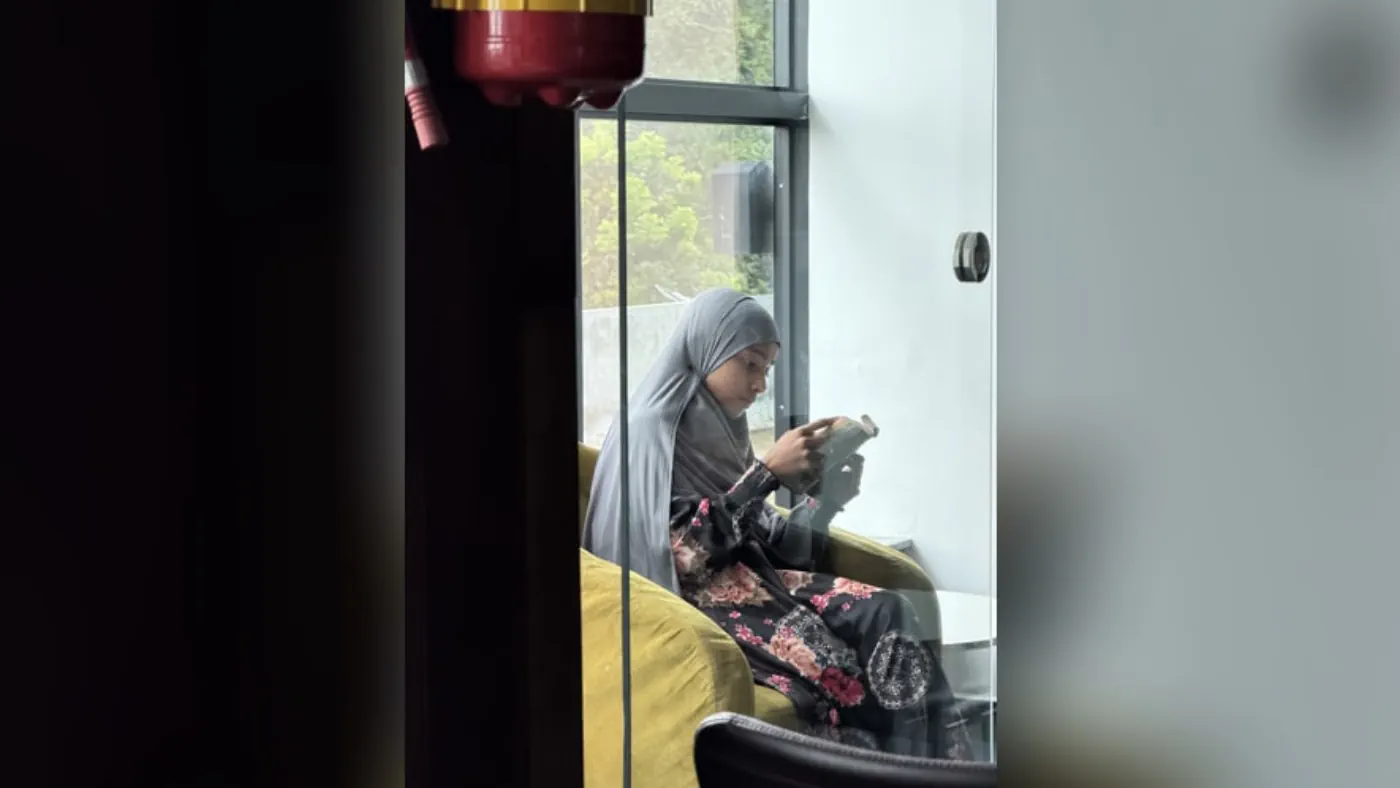
Aaisha finished Oliver Twist last week. The library copy, the old kind nobody requests anymore, spine soft, pages gone the colour of weak tea.
I wanted to read it again after her. I loved it at her age too: the orphan against the whole machinery of an uncaring system, Fagin’s gang, the workhouse. My allergies had other plans. Two pages in and the dust had me sneezing and defeated, beaten by a book older than my grandparents.
Aaisha didn’t have that problem. She just read it. The long sentences, the Victorian habit of describing a room for four paragraphs before anyone enters it, all of it. None of my kids get the easy version of anything. Dickens, Dostoevsky, the heavy stuff, every time, on purpose.
People ask me about this, usually politely. Isn’t fiction a waste of a child’s time when there’s coding to learn, exams to prepare for, actual skills to build? And if it has to be fiction, why the slow, difficult, nineteenth-century kind? Wouldn’t a summary do, or an easier book, or honestly, just more time doing something measurable?
I gave a short answer to that once already. I want to answer it properly this time.
Start with what the difficulty itself is doing. There is a researcher, Maryanne Wolf, who has spent decades studying what actually happens inside a reading brain, and she draws a hard line between two kinds of reading. One is the kind most of us default to now: scanning, skimming, hopping a headline to a link to another headline, never quite landing anywhere, what she bluntly calls a “shallowing” of the whole experience. The other is slow and demanding, occasionally annoying. It makes you reread a sentence. It makes you sit with a paragraph that refuses to give up its meaning on the first pass. Wolf has a name for what that slowness builds: cognitive patience. Her argument is that there is no shortcut to it. The difficulty is not an obstacle standing in front of the benefit. The difficulty is the mechanism.
She tested this claim on herself, which is the part of her work I trust most. She tried to reread Hermann Hesse’s Magister Ludi, a novel she had loved in her twenties, and found she could not do it anymore. She fought her way through sentences she used to love, rereading them out of frustration instead of pleasure. She had lost the very patience that book once asked of her, and she is one of the world’s leading experts on exactly that kind of loss. If it happened to her, it is not a personal failing. It is what frictionless reading does to anyone, given enough time.
Not sure where you stand as a parent right now?
Take the free Parenting ChecklistThis is why I do not protect my kids from the hard sentences. I assign them. A book that makes you work is training a kind of stamina that has nothing to do with literature and everything to do with everything else, the same patience that lets you sit with a difficult proof, a hard conversation, a problem at work that refuses to resolve in one sitting. Wolf connects this directly to what the psychologist Angela Duckworth calls grit. The genres we let children avoid because they are slow are, by her account, exactly the genres that build it. Friction builds what she calls the brain’s contemplative dimension, the seat of insight and empathy. Fiction is where that dimension actually gets used.
Wolf has a phrase for this part, borrowed from a theologian named John Dunne: passing over. Reading fiction lets you temporarily leave your own consciousness and occupy someone else’s. Not understand them from a polite distance, the way a case study would. Actually inhabit them for the length of the book: a thief’s mind, an orphan’s, a woman’s the moment before she steps in front of a train. You come back changed each time, not always comfortably.
There is a neurological version of this claim that I have not been able to stop thinking about since I first read it. Apparently, when you read closely enough about someone else’s physical or emotional experience, your brain quietly activates some of the same circuitry it would use if you were having that experience yourself. Read about Anna Karenina under the train, and the same neurons that govern your own legs and trunk are said to stir, just slightly. Fiction, in this account, is not sympathy held at a safe distance. It is closer to a rehearsal of being someone else, run quietly inside your own body.
Put the two ideas together and you get something close to what I actually believe. A hard novel forces the patience that passing over requires in order to happen at all. Skim a summary and you get the plot, which is information. Sit inside the slow version and you get something closer to a temporary loan of someone else’s interior life, which is formation. Those are not the same transaction, and only one of them is available to a reader in a hurry.
Wolf takes this all the way up to a civilisational scale, and I find myself agreeing with her more than I expected to. She worries that a generation that loses the patience for this kind of reading also loses practice at welcoming what she calls “the Other” as a guest within ourselves, and that this is not a private literary loss but a civic one. A society that cannot inhabit minds unlike its own, even fictional ones, has lost a specific kind of training for living next to people who actually are unlike itself. That is a much larger claim than “reading is good for you.” I think it is the right size for what is actually at stake.
So when someone asks if it is a waste of time to make my kids read Dickens and Dostoevsky instead of something faster and easier, that is my real answer. Not that it builds vocabulary, though it does. Not that it looks good on a school report, though I do not care if it does. It is that the difficulty is doing the work, and the work is the only way in.
I still have not reread Oliver Twist. Maybe I will wait for a cleaner edition, or maybe I will just ask Aaisha how it ends, even though I already know. Wolf closes her own book reaching for an old Latin phrase, festina lente, make haste slowly. I used to read that as a warning. Lately it sounds more like a parenting philosophy I arrived at on my own, several centuries late.
FAQ
Questions parents ask me
Isn't this too hard for young kids, and what age did you start?
Sometimes it is, and I do not pretend otherwise. I started earlier than most people expect, but never by a fixed birthday rule. I look for readiness, a child who can stay with a story, ask real questions, and tolerate not understanding every line.
What if my child hates it and refuses?
Then I slow down. I am not trying to win a power struggle with a novel. Sometimes I read aloud, sometimes I shorten the session, and sometimes I leave that book alone for a while and come back later.
Won't this make reading feel like a chore or punishment?
It will, if I use the book as a weapon. I try not to do that. The instinct I want here is the same one I want in the rest of parenting, with patience, not punishment, so the child feels stretched, not shamed.
How do you choose which hard books to give your kids?
I do not choose them because they are famous. I choose them because there is a real human life inside them, moral weight, foolishness, courage, sorrow, comedy, something worth sitting with after the last page. If a book offers only difficulty and no life, I am not interested.
Do your kids still get easy books and playful reading too?
Of course. I am not trying to turn childhood into a permanent entrance exam. Hard books belong beside delight, re-reading, silliness, and play, because I want my kids to love books, not merely survive them.