
Parenting
Child Stressed About Exams? 5 Practical Ways Parents Can Help
Exam stress in kids often looks like anger, avoidance or panic. A psychologist explains the hidden causes and 5 practical ways parents can genuinely help.
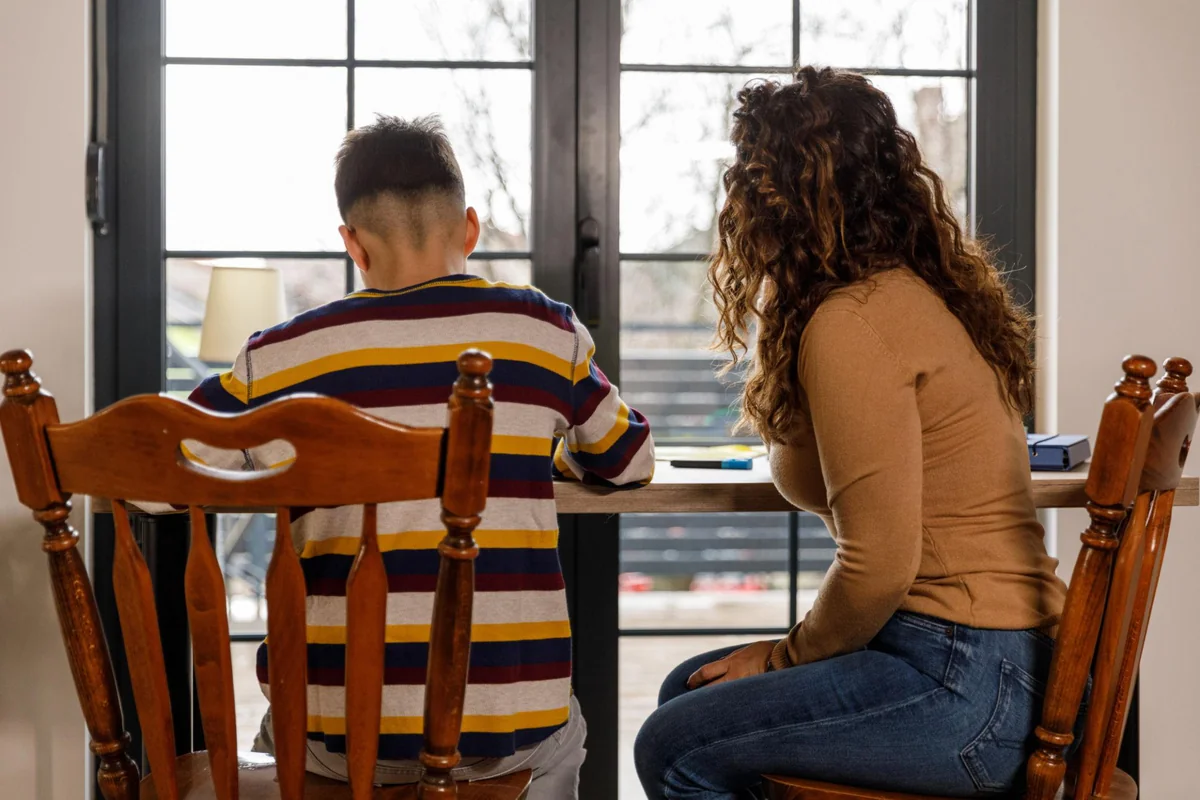
You have done everything the advice columns tell you to. You made the study schedule. You offered to quiz them. You reassured them the exam is easy and there is nothing to worry about. And still, the night before the test, your child is in tears at the kitchen table, insisting they cannot do it, that they are going to fail, that they are stupid. It feels like the harder you try to help, the more they seem to fall apart.
Here is the paradox worth sitting with: the thing you assume will calm a stressed child down is often the very thing that winds them up tighter. And the goal you think you are working toward is usually not the real one.
Your job the night before an exam is not to make your child study harder. It is to help their nervous system settle enough that their brain can actually work. A panicking brain cannot access what it already knows.
When a child is flooded with anxiety, the parts of the brain responsible for memory retrieval and clear thinking go partly offline. So the more you push facts into a frightened mind, the less sticks. Understanding that mechanism changes what “helping” actually looks like.
What You Think the Stress Looks Like vs. What It Actually Looks Like
Many parents expect exam stress to look like a child saying “I am worried about my test.” It rarely announces itself that cleanly. The real exam stress symptoms often show up in the body and behavior days before anyone opens a textbook.
What you might notice physically:
- Morning stomachaches, headaches or nausea that have no medical cause and fade once the pressure lifts
- Loss of appetite, or eating far more or less than usual
- Trouble falling asleep the night before, or waking repeatedly
What you might read as “attitude” but is often anxiety:
- Sudden angry outbursts or irritability that seem out of proportion
- Tearful meltdowns over small revision mistakes
- Avoiding the study material entirely, which parents often mistake for laziness when it is actually a nervous system trying to escape a threat
And the self-talk, which is the clearest signal of all: “I am going to fail,” “I am stupid,” “everyone else gets this except me.” It helps to know that test anxiety is genuinely common in school-age children, not a sign that something is wrong with your child specifically. This is a normal stress response, not a character flaw.
The Hidden Reasons Kids Actually Panic
What you think is happening: your child is worried about the exam.
What is often actually happening: your child is worried about what a bad result will mean about them, and about how you will feel.
For many children, a low mark does not feel like information about one test. It feels like evidence about their worth, or a threat to your approval. This is worth taking seriously, because research on academic stress finds that a child’s perception of parental pressure is closely tied to higher anxiety around schoolwork. The child does not have to be told “you must get top marks” to feel it. They read it in your face, your tone, the way you go quiet at a report card.
The second hidden driver is a practical one that looks like emotional collapse. A child often knows what they need to study but has no idea how to break it down. Facing an entire syllabus with no plan feels like standing at the base of a mountain with no path. The panic is not laziness. It is being overwhelmed with no strategy.
The third is perfectionism. Studies suggest that children who believe anything less than top marks counts as failure carry measurably higher test anxiety. When the only acceptable outcome is perfect, every study session becomes a test of whether they are good enough, and that is exhausting. This same rigidity can show up as the harsh inner voice of a child who is far too hard on themselves over small mistakes.
Sometimes the exam is only the surface. Underneath can sit the deeper worry that can leave a child feeling anxious for reasons they cannot name, and on the morning of a test it can become the quiet dread that can make a child suddenly beg to stay home on a test day.
5 Practical Ways Parents Can Help Reduce Exam Stress
These are the tools that address what is actually happening, not just what it looks like. This is how to reduce stress and anxiety during exams in a way that works with your child’s biology instead of against it.
-
Normalize the anxiety instead of dismissing it. The instinct is to say “don’t worry, it’s easy.” To an anxious child, that translates to “you are wrong to feel this, and I don’t get it.” Try instead: “It’s completely normal to feel nervous before a big test. Let’s work through it together.” Naming the feeling as normal and shared does more to settle a child than any reassurance about the test being easy. If a parent asks how should a parent respond when a child shows signs of stress, this is the starting point: validate first, solve second.
-
Break revision into bite-sized chunks. Instead of “go study for three hours,” set a timer for 20 minutes of focus followed by a 5 minute break. Small, defined blocks turn an impossible mountain into a set of doable steps. This is one of the most reliable habits that help reduce exam stress, because it gives the child a felt sense of progress rather than an endless, formless task.
-
Shift the focus from grades to effort. Praise the persistence, the showing up, the consistent study habit, not the final score. “I saw how you kept going even when that chapter was hard” tells a child that their value is not riding on the number at the top of the page. This directly loosens the fear of disappointing you, which is often the real engine of the panic.
-
Protect sleep, movement and downtime. Do not let late-night cramming steal sleep, because sleep loss directly weakens the very memory and learning ability a child needs on exam day. Trading rest for one more hour of revision is a bad exchange. Build in outdoor play or physical movement too, since regular physical activity measurably improves young people’s mental wellbeing and helps buffer stress. A walk or a game burns off nervous energy that would otherwise circle the mind at midnight.
-
Teach quick calming strategies for the morning of and mid-test. This is the piece most advice skips. Give your child a few simple somatic tools they can use alone at their desk when nerves spike. Three slow, deep breaths where the out-breath is longer than the in-breath. A quiet fist-squeeze-and-release to discharge tension. And the 3-3-3 rule, which is easy enough to use without anyone noticing.
Take the Free Parenting Checklist
Rescue Tools for the Night Before, the Morning Of, and the Blank-Mind Moment
Generic advice stops at “keep a routine.” Children need concrete things to do in the exact moments the panic hits.
For how to deal with exam stress the night before: stop active revision at least an hour before bed. The brain consolidates during sleep, and one more hour of cramming a rattled mind does less good than the rest it displaces. Lay out clothes and materials, do something calming, and let the studying be done. Anxiety loves the night before, so give the mind a landing place rather than an open runway.
For the morning of, teach the 3-3-3 rule as a portable anchor. Sitting at the desk, the child names 3 things they can see, notices 3 things they can hear, and moves 3 parts of their body, perhaps wiggling toes, rolling shoulders, tapping fingers. This pulls attention out of the spiral of worry and back into the present moment, which is exactly what the racing mind needs. It is a quiet, invisible way for a child to answer the question of how to not feel nervous for exams without needing anyone to intervene.
And for the most frightening moment of all, what to do when your mind goes blank in exams: teach your child that blanking is temporary and normal, not proof they know nothing. The move is to stop, put the pen down, and take three slow breaths, because slow, paced breathing has been shown to bring down anxiety by calming the body’s stress response. Then move to an easier question first. Answering something they do know signals to the brain that it is safe, and the missing information usually surfaces once the panic recedes.
The Part Nobody Wants to Hear: Your Own Stress
Here is the uncomfortable truth most exam advice leaves out. A large part of what your child is managing is your anxiety, not just their own. Children quietly absorb and mirror the anxiety they sense in a parent, so your own calm becomes part of their regulation. If you are hovering, checking, sighing at their mistakes and losing sleep over the outcome, they feel it, and their alarm system reads it as confirmation that this is indeed a catastrophe.
This does not mean faking cheerfulness. Children see through that instantly. It means doing your own settling first: slowing your breath before you walk into their room, checking your tone, and separating your hopes for their future from this one test. When you can hold steady, you give their nervous system something calm to borrow from. Managing your own reaction is not a nice extra. It is part of the intervention.
One Test Is a Snapshot of a Single Day
When your child is falling apart over an exam, it can feel enormous, as if this one result will set the course of their whole life. It will not. A grade is a snapshot of how one day went, not a measure of your child’s intelligence, their character or their future. What they will actually carry forward is how the people they love treated them when they were scared.
Across the field, a parent’s steady, believing support is one of the strongest things that helps a child cope with academic stress. Not perfect study plans, not flawless marks. Your calm presence and your belief in them, held steady even when the number on the page is disappointing. That is the thing worth protecting, long after this exam is forgotten.
FAQ
Frequently Asked Questions
What is the 3-3-3 rule for anxiety in children?
The 3-3-3 rule is a simple grounding tool a child can use alone at their desk. They name 3 things they can see, notice 3 things they can hear, and move 3 parts of their body, such as wiggling their toes, rolling their shoulders and tapping their fingers. This pulls attention out of the spiral of anxious thoughts and back into the present moment, which helps the racing mind settle enough to think clearly again.
What should I do if my child's mind goes blank or they freeze during the actual test?
Beforehand, teach them that blanking is temporary and normal, not proof they know nothing. In the moment, the move is to stop, put the pen down and take three slow breaths with a longer out-breath, since paced breathing calms the body's stress response. Then answer an easier question first, because succeeding at something they know signals to the brain that it is safe, and the missing information usually resurfaces once the panic eases.
Should I let my child stay home from school if they are panicking over an exam?
It is usually better to help them attend while supporting them through the fear, because avoiding the test can quietly teach the brain that panic is a valid escape route, which strengthens the anxiety over time. Instead, validate how they feel, use quick calming tools, and go together. That said, if the distress is severe, persistent or paired with other signs of struggle, it is worth pausing to look at what is really going on rather than just pushing through.
How do I handle my own stress so I don't pass it on to my child?
Children absorb and mirror the anxiety they sense in a parent, so your own calm is genuinely part of their regulation. Settle yourself before you engage with them: slow your breathing, check your tone, and consciously separate your hopes for their future from this single test. You do not need to fake cheerfulness, which children see through, but a steady presence gives their nervous system something calm to borrow from.