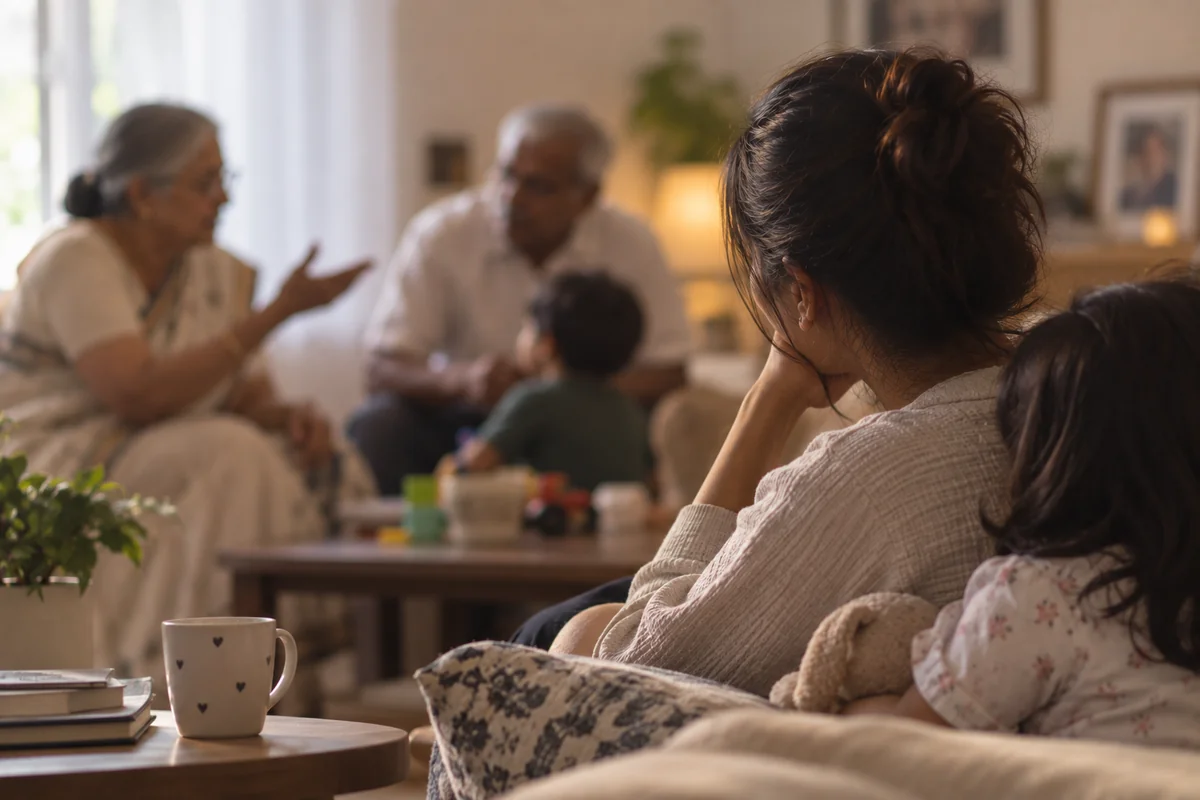
Parenting
Why Is My Child So Anxious? A Psychologist Explains What It Really Means
Why your child worries about everything, gets clingy at bedtime, or dreads school - and what actually helps, from a psychologist who works with anxious kids.
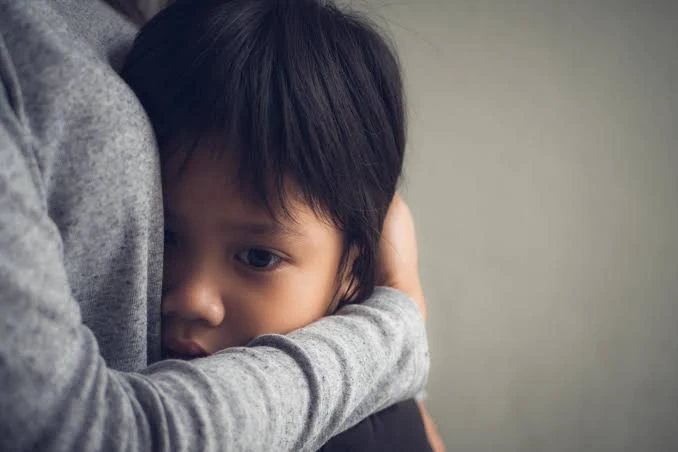
If your child seems anxious about everything, worries at bedtime, dreads school, or has suddenly become fearful when nothing obvious has changed, the most likely explanation is a combination of an anxious temperament they were partly born with, a sensitive alarm system firing when there is no real danger, and everyday patterns of reassurance and avoidance that accidentally keep the fear alive. It is common, it is not a sign of bad parenting, and it responds well to the right support.
In my work as a psychologist, one of the patterns I see most often is a worried parent sitting across from me convinced they have done something to cause their child’s anxiety. They have not. Anxiety is one of the most common experiences of childhood, and understanding why it shows up is the first step toward helping your child feel safer in their own skin.
What Is Actually Happening in an Anxious Child
Anxiety is not a flaw. It is a normal, protective system that scans for danger and gets the body ready to respond. In an anxious child, that system is simply set to fire too easily and too often. The heart races, the stomach churns, the mind fills with worst-case thoughts - all in situations where there is no actual threat, like a maths test, a sleepover, or a dark bedroom.
So when you ask why is my child so anxious, you are really asking why their internal alarm is so sensitive. The answer usually involves several threads woven together rather than one single cause.
An anxious temperament they were partly born with
Some children arrive in the world more cautious, more watchful, more easily overwhelmed by new things. Psychologists call this behavioral inhibition, and it is one of the strongest early predictors of later anxiety. These are the babies who cry at unfamiliar faces, the toddlers who cling at the edge of the playground, the children who need to watch for a long while before they join in.
This is temperament, not damage. Research tracing developmental pathways from early behavioral inhibition to later anxiety shows that while inhibited children are more likely to struggle with anxiety, this outcome is far from fixed. How the environment responds makes a real difference. A cautious temperament handled with warmth and gentle encouragement often becomes thoughtfulness and empathy, not a disorder.
Anxiety that is partly learned in the family
Anxiety tends to run in families, and part of that is genetic. But part of it is also learned, passed down through the thousands of tiny interactions between an anxious parent and a watching child. Children are exquisitely tuned to our faces and voices. When we tense up, hesitate, or signal that the world is dangerous, they absorb that message.
Studies on how anxiety transmits from parent to child describe this as a back-and-forth dynamic: an anxious child pulls anxious responses out of a parent, which then confirms the child’s fear, which pulls more anxious responses, and so the loop tightens. If you struggle with worry yourself, you are not to blame, but you do hold real leverage. If you have ever wondered why you feel anxious for no clear reason, tending to your own nervous system is one of the most direct ways to help your child.
Well-meaning overprotection and accommodation
This is the hardest one for loving parents to hear, because it comes from the best of intentions. When our child is distressed, every instinct says to remove the distress: answer the worry, sit by the bed, let them skip the party, do the talking for them. Each of these acts brings relief in the moment. But repeated over time, they quietly teach the child two things - that the feared situation really is dangerous, and that they cannot cope without us stepping in.
This is called accommodation, and research on intergenerational patterns of overprotection and child anxiety links high parental overprotection to higher anxiety in children. The pattern is not cruelty; it is love pointed in a direction that accidentally feeds the fear.
A low tolerance for uncertainty
Anxious children often cannot bear not knowing. What if it rains? What if my friend is sick? What if you forget to pick me up? They chase certainty through endless questions and requests for reassurance, and the relief lasts only until the next what-if arrives. A meta-analysis on intolerance of uncertainty and worry in children found a strong link between this discomfort with the unknown and anxiety symptoms. This is why a child can seem anxious about everything - the world is simply full of unknowns, and each one lights up the alarm.
Why Bedtime and School Are the Big Two
Two situations reliably trigger child anxiety more than any others: bedtime and school. There is a reason for that.
Bedtime removes all the daytime distractions. The child is alone, in the dark, with a quiet mind that finally has space to fill with worries. Separation from you is at its most complete. If you are wondering why your child is so anxious at bedtime, this is why - it is the moment their nervous system feels least protected. And it becomes a vicious cycle, because poor sleep worsens anxiety and anxiety worsens sleep. Research on bedtime, sleep duration, and anxiety in young children links later bedtimes and shorter sleep with higher anxiety symptoms, which is why protecting sleep is not a small thing.
School combines separation, performance, social evaluation, and unpredictability into one daily demand. For an anxious child, that is a lot. Some children become tearful and clingy at drop-off; others develop stomach aches, dread Sundays, or refuse to go altogether. A scoping review on school refusal and anxiety makes clear that refusal is usually a symptom of anxiety rather than defiance. If your child is dreading or avoiding school, it is worth understanding what their refusal to go to school really means before treating it as a behaviour problem.
Why It Can Seem to Appear All of a Sudden
Parents often tell me their child was fine and then anxiety arrived overnight. In reality, it rarely comes from nowhere. A sensitive temperament may have been humming quietly under the surface, and then a developmental stage, a small change at school, a frightening video, an illness, or a growth in imagination tips it into the open. Sometimes there genuinely is no identifiable trigger, and the alarm system just recalibrates to a more reactive setting for a while.
Whether it is your toddler, your daughter, or your son, the age and label matter less than the pattern. What you are seeing is a nervous system that has started sounding the alarm more easily. Sometimes that anxiety even shows up as irritability or big outbursts, which is why anger that scares you can sit right alongside fear in the same child.
What Parents Can Actually Do
Here is the encouraging part. Research on involving parents in treating youth anxiety shows that when parents shift how they respond, children improve - sometimes even without the child attending therapy directly. You are not powerless. You are the intervention.
- Stay calm and validate without amplifying. Name the feeling simply: “You’re feeling scared about the sleepover. That makes sense.” Then stop. Do not analyse the fear, catastrophise with them, or pile on reassurances. Your calm, steady presence tells their nervous system more than any words can.
- Stop over-reassuring. Answer a genuine question once. When the same worry returns for the fifth time, gently reflect it back: “You already know what I think about this. I trust you to handle the not-knowing.” Reassurance feels kind but keeps the worry cycle spinning.
- Reduce accommodation, one step at a time. Notice the things you do to prevent your child’s distress - answering for them, letting them avoid, staying in the room. Pick one and gently step back, letting them experience that they can cope.
- Support facing, not avoiding. The antidote to anxiety is approach in small, doable steps. Not the whole party, but ten minutes with you nearby. Not skipping school, but a supported return. Each successful step teaches the brain the situation was survivable.
- Protect sleep fiercely. Consistent bedtimes, a calming wind-down, screens off well before bed, and a predictable routine give the anxious brain the rest it needs to regulate. This is one of the highest-leverage changes you can make.
If your child is especially clingy through all of this, it helps to understand what that clinging to you actually means - it is a bid for safety, not manipulation, and it responds to warmth plus gentle confidence in their ability to manage.
Not sure where your family sits or what to prioritise first? A short structured check can help you see the patterns more clearly.
Take the Free Parenting Checklist
When to Get Professional Help
Some anxiety is a normal, even healthy part of growing up. It becomes a reason to seek help when it consistently interferes with sleep, school, friendships, or family life, when it has lasted for weeks and is getting worse, or when your child expresses hopelessness or does not want to be here. Trust your instinct: if the anxiety is running your household, that is enough reason to reach out.
The good news is genuinely good. Research reviewing what we have learned about pediatric anxiety confirms that childhood anxiety responds very well to treatment, especially approaches that teach the child to face fears gradually and that coach parents to respond in ways that build confidence. Getting help early usually means a shorter, gentler road.
A Gentler Way to Hold This
Your anxious child is not broken, and you have not failed them. You are raising a sensitive, watchful human whose alarm system needs a little more help learning what is safe. The most powerful thing you can offer is not to make the fear disappear, but to stand beside them calm and steady while they learn they can handle hard feelings. Every time you do that, you are teaching their nervous system something it will carry for life: I can be scared and still be okay.
FAQ
Frequently Asked Questions
Why is my child so anxious all of a sudden when nothing has changed?
Anxiety that seems to appear overnight often has quieter roots - a developmental leap, a small change at school, a scary story or video, or simply an anxious temperament reaching a new stage. Sometimes there is no single cause. The alarm system has just started firing more easily. If it settles within a few weeks with calm support, that is usually normal. If it keeps escalating or blocks daily life, seek a professional assessment.
Why is my toddler so anxious and clingy?
Some clinginess and separation distress is completely normal in toddlers, whose brains are wired to keep caregivers close. If your toddler is naturally cautious or slow to warm up, they may show more of it. This usually eases with gentle, predictable practice at short separations. Reassure once, stay calm, and let them see that you leave and come back reliably.
Is my child's anxiety my fault as an anxious parent?
No. Anxiety runs in families through genes, temperament, and learned patterns, but it is never a matter of blame. Children do pick up cues from how we respond to stress, which is actually good news - it means the small shifts you make in staying calm and not over-accommodating can genuinely help. Working on your own anxiety is one of the most powerful things you can do.
Should I let my anxious child stay home from school?
Occasional flexibility is fine, but repeatedly allowing avoidance tends to make school anxiety stronger over time. Avoidance teaches the brain that the feared place is truly dangerous. The kinder long-term approach is gentle, supported return with the school's help. If refusal is persistent or severe, involve a psychologist to build a graded plan.
When should I get professional help for my child's anxiety?
Seek help when anxiety consistently interferes with sleep, school, friendships, or family life, when it lasts for weeks and is getting worse, or when your child talks about not wanting to be here. Child anxiety responds very well to treatment, and getting support early usually means a shorter, easier path.