Relationships
Love Languages Are a Start, Not the Answer
What the popular love languages idea gets right, what research says it misses, and what truly helps couples feel loved: responsiveness, turning towards each other, and repair.

Love languages are a helpful starting point, but not the full answer. They give couples a shared way to talk about what makes them feel cared for. But research finds most people value all five, and “matching” love languages doesn’t guarantee a happier relationship. What matters more is responsiveness: feeling understood, noticed, and cared for, day after day.
”I’m speaking your language. Why isn’t it working?”
Meera and Arjun took the love languages quiz in their first year of marriage. Meera’s top language was quality time. Arjun’s was acts of service. They laughed at how accurate it felt, and promised to “speak” each other’s language.
Three years later, Arjun still handles the bills, fixes things around the house, and makes Meera’s morning tea. Meera plans weekend outings and keeps their evenings phone-free. On paper, they are doing everything right.
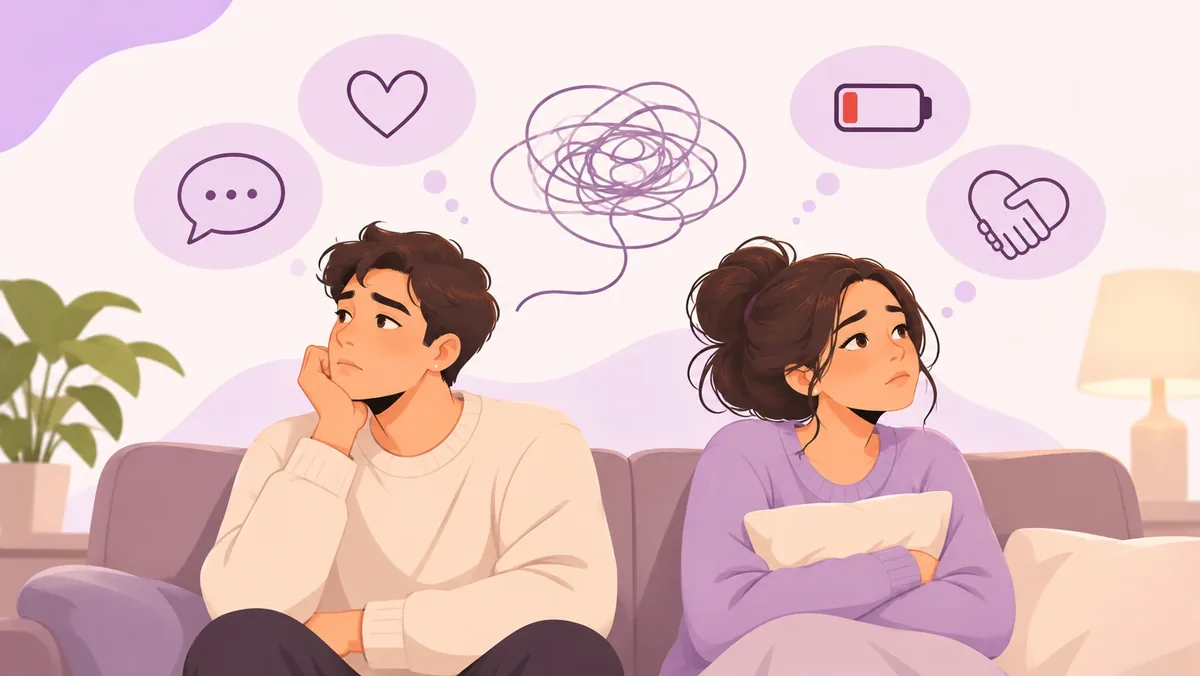
Yet they argue more than ever. One evening, Meera says quietly, “You do so much for me, but I don’t feel close to you.” Arjun, hurt and confused, replies, “I’m doing exactly what you said you needed.”
If this feels familiar, you are not alone. Love languages can be a wonderful starting point. But for many couples, that is all they are: a start.
What are love languages, and what do they get right?
The idea comes from Gary Chapman’s 1992 book The Five Love Languages. Drawing on his work as a marriage counsellor, Chapman suggested that people tend to give and receive love in five main ways:
| Love language | What it looks like |
|---|---|
| Words of affirmation | Compliments, encouragement, “I love you,” “I’m proud of you” |
| Quality time | Undivided attention, conversation, and shared experiences |
| Acts of service | Helping, easing your partner’s load, doing things for them |
| Receiving gifts | Thoughtful tokens that say “I was thinking of you” |
| Physical touch | Hugs, holding hands, closeness, and affection |
The concept became popular for good reasons. It gives couples a simple, shared vocabulary. It reminds us that our partner may not feel loved in the same way we do. And it opens conversations many couples never have, such as “What actually makes you feel cared for?”
For a couple who has never talked about emotional needs, that conversation alone can be a turning point.
Where do love languages fall short?
Despite their popularity, love languages were never developed through scientific research. As psychologists have begun testing the idea, the findings invite a more nuanced view.
Most people value all five. Rather than having one dominant language, most people appreciate every form of love, especially when it is offered sincerely. Feeling loved is less like speaking one language and more like needing a balanced diet.
Matching doesn’t guarantee happiness. In a preregistered study of 499 people in long-term relationships, published in the Journal of Marital and Family Therapy, fewer than half had an identifiable primary love language at all. Receiving love in your “preferred” way predicted relationship quality no better than receiving other kinds of love. What mattered more was feeling satisfied across a wide range of loving behaviours, such as encouragement, support in difficult times, and accountability.
Needs change. A new mother may long for acts of service. Someone grieving may need touch and presence. A partner going through job stress may need words of reassurance. A label from a quiz years ago may no longer fit who your partner is today.
Labels can limit us. When we think, “My partner’s language is gifts, not touch,” we may stop noticing what they actually need in a particular moment.
What is the scorekeeping trap?
There is a quieter risk too. Love languages can slowly turn affection into a transaction:
- “I did the dishes, so I’ve spoken your language. Where’s my quality time?”
- “I bought you flowers. Why are you still upset?”
When love becomes a checklist, partners start keeping score. Each act becomes a deposit, and each partner waits for a return. Resentment builds when the account feels unbalanced, and love starts to feel like an obligation rather than a gift.
This is what happened with Meera and Arjun. Arjun was faithfully doing acts of service, but on autopilot, while his mind was elsewhere. Meera wasn’t asking for more tasks. She was asking to feel seen.
The acts were right. The connection behind them was missing. (If your relationship has started to feel more like a well-run household than a partnership, see when your relationship feels like coordination, not connection.)
What matters more than your love language?
Relationship research points to a few qualities that make the deepest difference.
1. Responsiveness
Psychologists describe perceived partner responsiveness as feeling understood, valued, and cared for by your partner. It isn’t about grand gestures. It’s the sense that “my partner gets me, and responds to what I actually need.” Relationship researchers see it as one of the core ingredients of a satisfying relationship.
2. Turning towards bids for connection
Relationship researcher John Gottman describes how partners constantly make small “bids” for attention: a comment about the news, a sigh, a funny video, a hand on the shoulder. What matters is how the other responds. Do they turn towards the bid, turn away by ignoring it, or turn against it with irritation?
Small, everyday moments add up. In an observational study of newlywed couples by Gottman and colleague Janice Driver, couples who shared more engaged, playful moments during an ordinary dinner showed more humour and affection when they later discussed a conflict.
3. Repair
Every couple argues and misunderstands each other. Healthy couples aren’t the ones who never fight. They are the ones who know how to repair: a sincere apology, a touch, humour, or simply saying, “Can we start this conversation again?”
None of these depend on knowing your love language. They depend on paying attention.
What deeper need is beneath each love language?
Each love language is often a doorway to a deeper emotional need. When we look past the action to the need behind it, we understand our partner far better.
| When your partner asks for… | They may really be longing for… |
|---|---|
| Words of affirmation | To feel valued, appreciated, and good enough |
| Quality time | To feel important, and chosen over everything else |
| Acts of service | To feel supported, and not alone with life’s load |
| Gifts | To feel remembered and thought of |
| Physical touch | To feel safe, close, and wanted |
Attachment research suggests that at the heart of most relationships are a few core questions: Are you there for me? Do I matter to you? Will you come when I need you? Love languages are simply different ways of answering “yes” to those questions. The answer matters more than the language it is spoken in. (For more on the needs behind them, see understanding emotional needs in relationships.)
When Meera said she wanted quality time, what she truly needed was to feel she still mattered to Arjun beyond the routines of married life. Once they understood this, the solution wasn’t more outings. It was ten minutes each evening of real, unhurried conversation.
How can you use love languages wisely?
You don’t need to throw love languages away. Use them as a starting point for curiosity rather than a final answer.
- Ask, don’t assume. Instead of relying on a quiz result, ask regularly: “What would make you feel loved this week?” The answer may surprise you.
- Offer love in many forms. Since most people value all five, a mix of kind words, attention, help, small surprises, and affection usually lands better than focusing on just one.
- Be present while you give. Making tea while scrolling your phone is not the same as making tea and asking, “How did you sleep?” Presence turns an action into connection.
- Notice the small bids. When your partner shares something, even something trivial, pause and turn towards it. These tiny moments matter more than occasional grand gestures.
- Give without keeping score. Love offered freely builds closeness. Love offered as a trade builds resentment.
- Repair quickly and kindly. After a disagreement, reach out first. A simple “I’m sorry I snapped. I want us to be okay” can heal more than any perfect gesture.
A weekly check-in for couples
Set aside 15 minutes each week, phones away, and take turns answering:
- When did you feel most loved by me this week?
- When did you feel distant or unseen?
- What’s one small thing I could do next week to support you?
- What’s something you appreciated about us this week?
Listen without defending yourself. The goal is understanding, not winning. If these conversations keep ending in one partner pursuing and the other shutting down, always the one reaching out? may help, and Crink also offers online couples counselling.
Love is a language you keep learning
Love languages gave many couples a beautiful gift: permission to talk about how they want to be loved. But love isn’t a code you crack once with a quiz. It’s a language you keep learning together, as you both grow and change.
The couples who thrive aren’t the ones who know each other’s love language by heart. They are the ones who stay curious, keep turning towards each other, and keep asking, “What do you need from me today?”
Take a moment to reflect: What has helped you and your partner feel truly understood?
Let’s make relationships a space for curiosity, reflection, and learning, not judgment.
FAQ
Frequently Asked Questions
What are the five love languages?
The idea comes from Gary Chapman's 1992 book The Five Love Languages. He suggested people tend to give and receive love through words of affirmation, quality time, acts of service, receiving gifts, and physical touch. The concept gives couples a simple shared vocabulary for talking about what makes them feel cared for.
Are love languages scientifically proven?
Not really. They were not developed through scientific research, and studies testing them have found limited support. In one preregistered study of 499 people in long-term relationships, fewer than half had an identifiable primary love language, and receiving love in your 'preferred' way predicted relationship quality no better than other loving behaviours.
What matters more than knowing your partner's love language?
Responsiveness (feeling understood, valued, and cared for by your partner), turning towards each other's small everyday bids for attention, and repairing well after conflict. Research also finds that feeling satisfied across a wide range of loving behaviours matters more than any single language.
Why don't I feel loved even though my partner speaks my love language?
Often the actions are right but the connection behind them is missing. Acts done on autopilot, or as a trade, rarely make someone feel seen. Look beneath the love language to the deeper need, such as feeling important, supported, or safe, and focus on being present while you give.