Relationships
Always the One Reaching Out? Emotional Avoidance in Relationships
When one partner wants to talk and the other shuts down. What emotional avoidance is, what it does to the partner who keeps reaching out, when silence becomes control, and how couples can find a healthier way to handle hard conversations.

Emotional avoidance is when someone tries to escape or shut down uncomfortable emotions, their own or their partner’s. In relationships, it often leaves one partner always reaching out, apologising first, and carrying every attempt at repair. Avoidance isn’t always a sign of not caring. But a relationship only becomes healthier when both partners work on the pattern, and one person cannot do it alone.
”I just want him to listen to me”
A young woman once shared something during a counselling session that stayed with me.
She was engaged and genuinely loved her partner. They had good moments together, and she wanted the relationship to work. But one thing kept hurting her.
Whenever something upset her, she wanted to talk about it. She wasn’t necessarily looking for advice or a solution. Sometimes, all she wanted was for him to listen and understand why she felt that way.
But these conversations rarely went as she hoped. When she tried to explain her feelings, he would tell her she was being too emotional. Sometimes he said that talking to her was exhausting. And when she pointed out that he was dismissing her feelings, he would respond, “Men have feelings too.”
Things became even harder whenever they argued. He would stop talking to her: not for a few hours to calm down, but sometimes for days or even weeks.
Eventually, she would be the one to reach out, apologise, or try to make things normal again. Even when she felt he had been unfair, she put her hurt aside because she couldn’t bear the silence any longer.
In one conversation, she said something that captured how exhausted she felt:
“I feel like I’m the only one trying to keep this relationship together. I’m tired of always being the one who comes back.”
What she was describing is something many people experience: one partner desperately wants to talk things through, while the other shuts down whenever emotions become uncomfortable. This pattern is often connected to emotional avoidance.
What is emotional avoidance?
Emotional avoidance means trying to escape, suppress, or distance yourself from uncomfortable emotions, whether they are your own or someone else’s.
For some people, emotional conversations feel uncomfortable or even overwhelming. They may care deeply about their partner, but when strong emotions enter the conversation, they simply don’t know what to do. In relationships, it can look like this:
| Situation | Avoidant response |
|---|---|
| Your partner asks, “Are you upset about something?" | "No, I’m fine.” |
| They tell you something you did hurt them. | ”Why are you making such a big deal out of this?” |
| An argument begins. | Leaving the room, or stopping replying to messages. |
| A difficult topic comes up. | Making a joke, staying busy, or pretending nothing happened. |
Not everyone who does these things is deliberately trying to hurt their partner. For some, avoiding emotions has become such a familiar response that they barely notice they’re doing it. But even when the intention isn’t harmful, the impact can be significant.
If you are the partner who tends to go quiet, why you shut down when your partner needs you most explores where that response comes from, including childhood messages like “stop crying” or “be strong,” fear of conflict, feeling overwhelmed, and shame. It also covers practical steps for opening up. This post focuses on the other side: the partner who keeps reaching out.
One thing is worth holding onto, though. Someone who says “I have feelings too” may genuinely be experiencing sadness, frustration, or fear. But having feelings and communicating them in a healthy way are two different skills.
Why do couples get stuck in this pattern?
Imagine this situation:
- A woman feels hurt because her partner dismissed something important to her. She wants to talk about it.
- He feels uncomfortable and tries to avoid the conversation.
- She notices him pulling away and becomes more upset: “Why can’t you just talk to me?”
- He feels pressured: “Why do we have to discuss everything? Can’t we just leave it?”
- She begins to feel he doesn’t care. He begins to feel nothing he says will ever be enough.
- She tries harder to get a response, and he withdraws further.
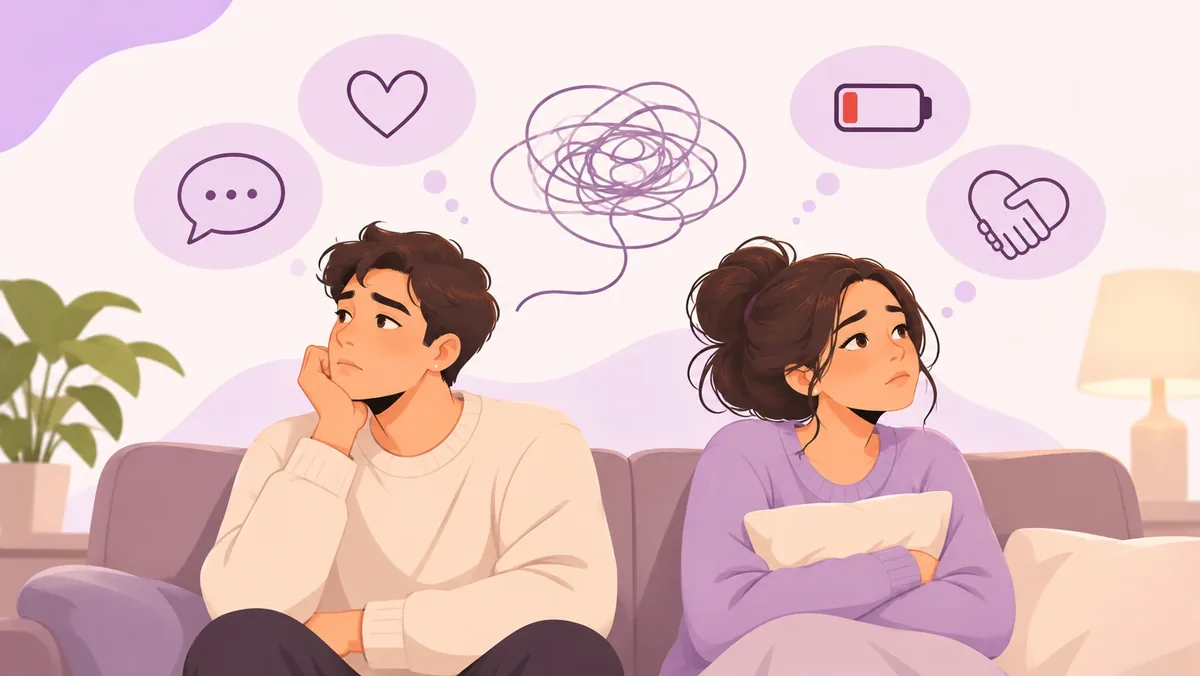
This is often called a pursue-withdraw (or demand-withdraw) pattern. One person seeks closeness and reassurance through conversation, while the other manages discomfort by creating distance. The more one pursues, the more the other withdraws, and the more one withdraws, the more anxious or frustrated the other becomes.
Research has studied this closely. In a study of 182 couples published in the Journal of Family Psychology, more demand-withdraw communication was linked with greater relationship distress. Interestingly, the usual roles reversed depending on whose concern was being discussed, a reminder that this is a pattern between two people, not a fixed trait of one gender.
Understanding this pattern should never become an excuse for repeatedly dismissing someone’s feelings or refusing to take responsibility for hurtful behaviour. Both partners’ experiences matter, and both need to contribute to healthier communication.
What happens to the partner who is always reaching out?
Being repeatedly dismissed by someone you love can affect you in ways you may not immediately notice.
At first, you may simply feel frustrated. But when it happens again and again, frustration can turn into self-doubt:
- “Am I really too emotional?”
- “Should I stop bringing up things that upset me?”
- “Maybe I’m expecting too much.”
You might start keeping things to yourself because sharing feelings seems to create more problems. Or you find yourself apologising first after every argument, even when you don’t believe you were wrong, just to end the silence.
Some people describe feeling lonely despite being in a relationship. They have someone to share daily life with, but they don’t feel emotionally supported, and that loneliness is especially painful because the person they want comfort from is the same person they feel disconnected from.
Wanting to be heard, understood, and treated with respect is a reasonable emotional need (see understanding emotional needs in relationships). At the same time, when we feel repeatedly unheard, we may become more demanding or desperate for reassurance. Recognising that reaction can help you communicate differently, without taking responsibility for another person’s dismissive behaviour.
What can you do if you’re the one seeking closeness?
1. Choose the right moment
When something hurts, it’s natural to want to discuss it straight away. But if your partner is exhausted, distracted, or already upset, the conversation may not go well. Try: “There’s something that’s been bothering me. Can we talk about it when we’re both free?“
2. Talk about how you feel, not just what your partner does wrong
| Instead of… | Try… |
|---|---|
| ”You never listen to me. You always ignore my feelings." | "I feel lonely when we stop talking after an argument. I really want us to find a better way to handle disagreements.” |
The second communicates the emotional impact without immediately putting the other person on the defensive. It doesn’t guarantee a good response, but it creates a better starting point.
3. Be clear about what you need
Your partner may assume every emotional conversation requires them to fix something. If what you need is simply to be heard, say so: “I’m not asking you to fix this. I just want you to listen for a few minutes.”
4. Give space, but don’t accept endless silence
Respecting someone’s need for a break is healthy. Being ignored for days or weeks is different. You can say: “I understand that you need time when you’re upset. But when we stop talking for days, it hurts me. I need us to agree on a way to come back and discuss things.”
A partner who needs a break can also say, “I’m feeling overwhelmed. I want to talk about this, but I need some time. Can we continue tonight?” That creates space to calm down. Disappearing for days without explanation can leave the other person feeling abandoned or punished.
5. Remember that you cannot carry the relationship alone
This matters most if you are always the one apologising, reaching out, or trying to make things right. You can improve how you communicate, express your needs calmly, and give your partner space to respond. But you cannot do their part for them. A relationship becomes healthier when both people are willing to recognise their patterns and work on them.
A simple exercise to try together
If you keep repeating the same arguments, set aside ten or fifteen minutes when you are both calm. Take turns completing these two sentences:
- “When we have an argument, I usually…”
- “What I need from you during those moments is…”
For example:
“When we argue, I keep asking questions because I get scared when you stop talking. I need reassurance that we will work things out.”
“When we argue, I feel overwhelmed and don’t know what to say. I need a little time to calm down before continuing.”
Listen without interrupting or correcting each other. Then agree on one small change. Perhaps the partner who withdraws will say when they need a break and when they will return, and the partner who seeks reassurance will practise allowing that agreed break without restarting the argument.
The goal is not to decide who is right. It is to understand what happens between you when emotions get difficult, and find a way to respond differently. This exercise is suitable when both partners feel safe speaking openly and are willing to take part.
When does silence become more than emotional avoidance?
Not every person who withdraws during conflict is trying to hurt their partner. Sometimes silence is simply an attempt to manage overwhelming emotions. But silence can also be used as a form of punishment or control. There is a meaningful difference between needing a few hours to calm down and deliberately refusing to communicate until the other person gives in. (For more on this, see what the silent treatment does to your relationship.)
Pay attention if your partner repeatedly:
- Stops talking to you for days or weeks
- Dismisses your feelings as unreasonable
- Expects you to apologise before they will speak to you again
It is particularly concerning if you’ve started to feel afraid to disagree, constantly question your own feelings, or give in to things you’re uncomfortable with just to restore communication.
Understanding why someone avoids emotions does not mean you have to accept behaviour that repeatedly hurts or controls you. If you recognise these experiences, speaking privately with a psychologist or someone you trust can help you understand the situation and consider your next steps. Is my relationship toxic? may also help.
A note for engaged couples
If you notice these patterns before marriage, don’t assume they will disappear afterwards. Marriage brings new responsibilities, expectations, and stressors, and existing communication difficulties usually continue unless both partners address them.
This doesn’t mean every couple experiencing emotional avoidance should reconsider marriage. It means that learning how to manage disagreements, express feelings, and repair conflict before marriage can be valuable. Premarital counselling offers a supportive space to explore these patterns before they become deeply established.
When should you consider professional support?
You don’t have to wait until your relationship reaches a breaking point. Consider speaking with a psychologist if arguments regularly end in prolonged silence, one partner consistently feels dismissed, or you both feel trapped in the same frustrating conversations.
In couples counselling, a psychologist can help identify communication patterns, explore what happens emotionally during disagreements, and support both partners in developing healthier responses. It works: a meta-analysis of 58 studies found couple therapy had a large positive effect on relationship satisfaction, communication, and emotional intimacy. Crink offers online couples counselling, including before marriage.
If there is intimidation, abuse, or coercive control, individual safety-focused support may be more appropriate than joint counselling.
Final thoughts
Sometimes the person who keeps asking, “Can we please talk?” is not trying to start another argument. They may simply be looking for reassurance that their feelings matter. And sometimes the person who goes quiet is not indifferent. They may be struggling to find words for emotions they never learned to express.
But understanding each other is only the beginning. The partner who withdraws needs to learn that difficult conversations can’t always be avoided. And the partner who seeks closeness needs to know they can express their feelings without having to chase, plead, or carry every attempt at reconciliation.
Neither person has to communicate perfectly. What matters is whether both are willing to listen, take responsibility, and keep trying to understand each other.
A healthy relationship isn’t one where difficult feelings never arise. It’s one where both people can gradually learn to face those feelings without losing their connection to each other.
FAQ
Frequently Asked Questions
Does emotional avoidance mean my partner doesn't love me?
Not necessarily. Some people struggle with emotional expression even when they care deeply about their partner. But love alone does not resolve communication difficulties. A willingness to listen, acknowledge hurt, and work towards change matters too.
Can an emotionally avoidant person change?
Yes. Emotional expression and communication are skills that can be developed. Change usually requires awareness, consistent effort, and a willingness to tolerate uncomfortable conversations. Counselling can help when these patterns are deeply established.
Are men more emotionally avoidant than women?
Emotional avoidance can occur in anyone. Gender expectations and childhood messages about feelings can influence how people learn to respond, and research on couples finds the 'who pursues, who withdraws' pattern can reverse depending on whose concern is being discussed. It is more helpful to understand the individual than to assume behaviour based on gender.
Why am I always the one who apologises first?
Sometimes one partner finds unresolved conflict more distressing and reaches out first to restore connection. But if you consistently apologise just to end prolonged silence, even when you have been hurt, it is worth examining whether the relationship allows both partners to take responsibility.
Should I end my relationship if my partner avoids emotions?
That depends on the overall relationship: whether you feel respected and safe, whether your partner acknowledges the problem, and whether meaningful changes are happening. A psychologist can help you explore these factors without making the decision for you.