Relationships
Online Couples / Relationship Counselling: How It Works and Is It Worth It?
Wondering if online couples counselling is worth it? Here is how it works, what it helps with, whether online is as good as in person, and how to choose well.
Yes. For most couples who are willing to actually show up and do the work, relationship counselling is worth it, and doing it online does not water down what happens. What matters is not the screen. What matters is whether both partners are present, honest, and willing to try something different than the pattern that keeps hurting them.
Let me walk you through how it actually works and how to decide if it is right for you.
What Online Couples Counselling Actually Is
Online couples counselling is the same therapeutic work you would do in a room together, delivered over video with a qualified psychologist or couples therapist. You and your partner meet the counsellor on a scheduled call, usually weekly or fortnightly, and you work through what is happening between you.
The evidence here is reassuring. When we look at outcomes across the field, decades of research on couples therapy show that most couples who go through it end up more satisfied than couples who never get help. This is not a small effect. The couples who reach out and stay in the process tend to do meaningfully better than the ones who wait and hope things settle on their own.
Online simply removes the friction. No commute, no coordinating two schedules around a physical location, no sitting in a waiting room feeling exposed. For many couples, that lower barrier is the difference between booking the session and putting it off for another six months.
How a Typical Session Works
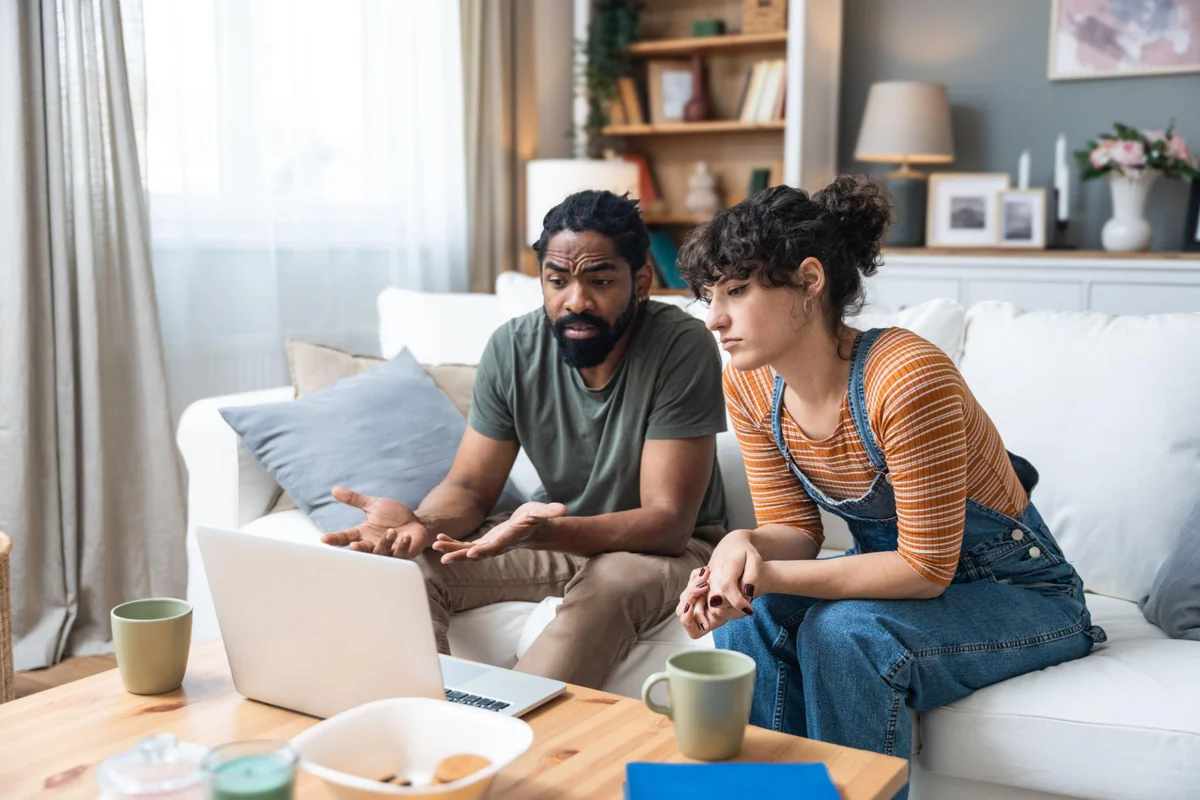
In a standard session, both partners join together. Most couples sit side by side on one screen, though some choose two screens from separate rooms when they are travelling or living apart temporarily. Either works.
The counsellor does not sit as a referee deciding who is right. In the room, what I see again and again is that couples arrive expecting a verdict, and what actually helps them is something quieter. My job is to slow the conversation down, notice the pattern you keep falling into, and help each of you hear what the other is really saying underneath the frustration.
A session usually moves through a few stages. We start by checking in on the week, including anything that flared up since we last spoke. Then we work with a live issue, not just talking about the fight but often stepping back into it gently so I can see how it unfolds in real time. Toward the end, we name what we noticed and set something small to practise before the next session.
That practising part matters more than people expect. This is where couples often reach out and hit the same triggers at home the moment the session ends. You leave feeling connected and clear, and then Tuesday night arrives and the old reaction fires before you remember any of it. This is normal. It is not failure. It is simply how deeply grooved these patterns are.
What It Helps With
Couples counselling helps with the things that quietly erode a relationship over time. The most common reasons couples come to me include:
- Recurring fights that never resolve, the same argument in different clothes. If this is you, it is worth understanding why so many couples keep having the same fight over and over.
- Disconnection, where you are functioning as roommates or co-parents but the warmth has drained out.
- Trust ruptures, whether from an affair, a lie, or a slow accumulation of small betrayals.
- Life transitions, such as a new baby, a career change, relocation, illness, or grief, that shift the ground under a relationship.
The approaches with the strongest track record focus on the emotions driving the conflict, not just the surface behaviour. Reviews of emotionally focused couples work find that helping partners understand the emotions underneath their fights produces lasting improvement in the relationship. When you can see that your partner’s anger is often fear, and your withdrawal is often overwhelm, the fight changes shape.
And for couples in genuine distress, this is not soft comfort. Structured therapy aimed specifically at relationship distress has been shown to reduce conflict and rebuild closeness for couples in real difficulty. You do not have to be mildly unhappy to benefit. Couples who feel close to the edge can and do recover.
What It Is Not For
I want to be honest about a boundary here, because it matters. Couples counselling is not the right path when there is active abuse in the relationship, whether physical, sexual, or a pattern of coercive control and intimidation.
In those situations, sitting a couple down together to talk openly can be unsafe. It can give an abusive partner more information to use, and it can put the other person at real risk. If this describes your relationship, please seek individual support and a safety-focused service first. That is not a lesser form of help. It is the correct form of help for that situation.
Couples counselling is also not a tool for one partner to fix or manage the other. Both people need to be at least willing to look at their own part. If only one of you wants change and the other is attending under pressure, we can still work with that, but it is worth naming honestly at the start.
Does Online Work as Well as in Person?
This is the question I hear most, and the honest answer is that for the majority of couples, yes.
The research backs this up directly. Studies on guided online couple programmes find they can improve both satisfaction and communication, so the format itself does not hold the work back. What drives outcomes is the quality of the therapeutic relationship and whether the couple engages, not whether you are in a physical room.
There are a few practical things that make online work better. A private space where neither of you feels overheard. Decent internet so the emotional thread does not keep breaking. And a willingness to treat the session with the same seriousness you would if you had travelled to an office, meaning no scrolling, no cooking, no half-attention.
Some couples do find certain moments harder online, particularly when emotions run very high and you cannot reach across and hold a hand. A good counsellor works with this, not around it. If you want a fuller comparison, it helps to understand how online counselling compares with therapy and coaching more broadly.
Is It Worth the Money and Time?
Let me be straightforward about cost. Couples counselling is an investment of both money and emotional energy, and it usually takes more than one or two sessions to shift a pattern that took years to form.
So is it worth it? For couples willing to engage, I believe it is one of the highest-return decisions you can make, and here is why. The alternative is rarely staying still. Untreated relationship distress tends to deepen. It affects your sleep, your work, your health, and if you have children, it shapes the emotional climate they grow up in. Measured against the cost of a relationship slowly ending, or of years spent unhappy, focused counselling is often the cheaper path.
“Couples often tell me they wish they had come in years earlier,” says Hima Thahsin, Consultant Psychologist. “The work is rarely as frightening as the silence they were living in before they reached out.”
The value also depends on what happens between sessions. The old model gave you fifty focused minutes and then left you alone with your triggers for a week. The stronger model recognises that the real work happens at home, in the moment the pattern fires. This is where between-session support changes things, and it is worth reading how support between sessions helps couples hold on to what they practised.
What to Look For in a Service
When you are choosing where to book, a few things separate good from mediocre.
First, look for a properly qualified human psychologist or couples therapist, not an unregulated coach presenting themselves as a therapist for distressed relationships. Credentials and supervision matter when the stakes are your relationship.
Second, ask how they handle the gap between sessions. Some newer, AI-native services now pair a human psychologist with structured support you can use at home, so that when you hit a trigger on a Tuesday night you have something to reach for instead of falling straight back into the old fight. This is the direction good care is moving in, because it holds on to progress instead of losing it each week. Crink is one example of this approach: a licensed counsellor leads the work, and an AI companion, Cri, supports reflection in the roughly 167 hours between sessions, so what you practise together does not quietly evaporate the moment the call ends. The principle matters more than any single name, so whoever you choose, ask what support exists outside the fifty minutes.
Third, look for a clear, honest description of what they treat and what they do not. A service that names its boundaries, including when couples work is not appropriate, is usually a service that takes safety seriously.
When to Go Together Versus Individually
Most of the time, if the concern is the relationship, you come together. The relationship is the client, and both of you need to be in the room.
| Your situation | Usually the better starting point |
|---|---|
| The main concern is the relationship itself | Come together, since the relationship is the client |
| One partner has untreated depression, trauma, or a substance issue | Individual therapy to steady that, alongside or before joint work |
| There is active abuse or coercive control | Individual and safety-focused support first, not joint sessions |
| One partner is unsure whether they want to stay | A few individual sessions first, so joint work can be honest |
There are times individual work makes more sense first. If one of you is struggling with something personal that spills into the relationship, such as untreated depression, trauma, or a substance issue, individual therapy can steady you before or alongside couples work. If there is active abuse, as I mentioned, individual and safety-focused support comes first. And sometimes one partner needs a few individual sessions to decide whether they even want to stay, before joint work would be honest.
A good counsellor will help you sort out which path fits, and it is entirely normal to combine both.
Match with a Therapist for You and Your Partner
A Gentle Word Before You Decide
If you have read this far, some part of you is already leaning toward getting help, and I want to meet that honestly. Choosing to sit down together and work on your relationship is not an admission that you have failed. In the room, the couples I respect most are the ones who came in early, while they still had warmth to protect, not the ones who waited until almost nothing was left.
Reaching out together is a sign of strength and care, not a last resort. Whether you do that in person or online, with or without support between sessions, the willingness to show up for each other is already the beginning of the repair.
FAQ
Frequently Asked Questions
How long does online couples counselling usually take to work?
Most couples start noticing small shifts within a few sessions, but lasting change to a deep pattern usually takes a series of sessions over some months. The patterns you are working on often took years to form, so give the process room. What matters more than speed is that both of you keep showing up and practising between sessions.
Does online couples counselling work as well as meeting in person?
For most couples, yes. Research on guided online couple work shows real improvement in satisfaction and communication, so the format itself does not hold the work back. What drives results is the quality of the relationship with your counsellor and whether both of you genuinely engage. A private space and steady internet help the sessions land properly.
Can we do couples counselling if only one partner really wants to?
You can start, and it is worth naming that imbalance openly in the first session. Sometimes a reluctant partner softens once they realise the room is not a place to be blamed. If one person is fully unwilling, individual therapy for the other can still help you decide what you want and how to move forward. Both are honest, valid paths.
Is couples counselling appropriate if there is abuse in the relationship?
No, not as a first step. When there is active abuse, whether physical, sexual, or a pattern of coercive control, joint sessions can be unsafe and are not recommended. Please seek individual and safety-focused support first. That is the correct form of help for that situation, and it protects you rather than exposing you to more risk.