
Self
How Gratitude Can Brighten Your Day, Even When Life Gets Tough
Gratitude isn't about pretending everything is fine. What it really is, what research says it can and can't do, and four simple ways to practise it, even on hard days.
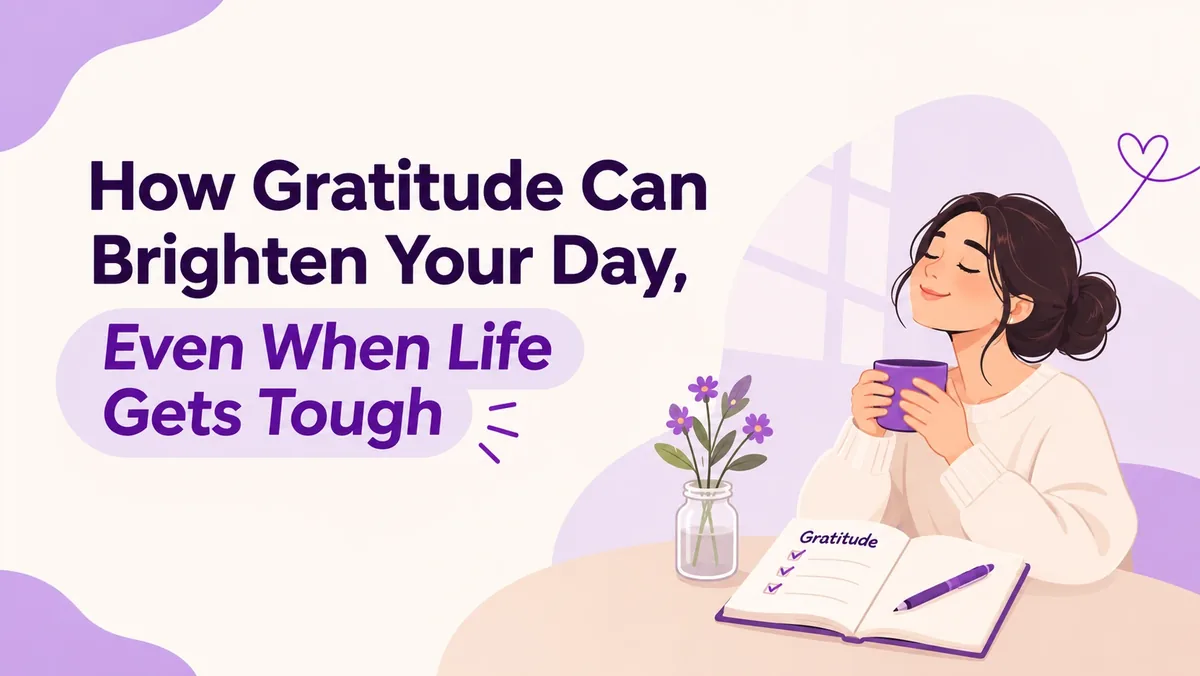
Gratitude can brighten a hard day, not by making problems disappear, but by widening your attention enough to notice what is still good alongside them. It is the practice of recognising the people, moments, and small comforts that support you. You can feel exhausted or worried and still appreciate one small thing. Both can be true at once.
Imagine you wake up late, rush to catch the bus, and watch it pull away just as you reach the stop. Before you have recovered, an email arrives with more work than you expected. It feels as though the day is already going wrong.
Then a friend sends a kind message asking how you are. Or you notice the warmth of the sunlight while you hold your morning tea.
Nothing about the difficult parts has magically changed. Yet for a moment, the day feels a little lighter.
That small shift is worth noticing. It doesn’t mean the problems have gone. It means that, alongside what is difficult, something meaningful is still there. This is where gratitude can make a difference.
What exactly is gratitude?
Gratitude is the practice of recognising and appreciating the people, experiences, opportunities, or small moments that bring meaning or support into our lives. It might be a friend who listens without judging, a meal shared with family, the chance to rest after a tiring day, or the effort you made to get through something hard.
Gratitude is not about pretending everything is fine or forcing yourself to feel happy. You can feel disappointed, worried, or exhausted and still appreciate one small thing. Both experiences can exist at the same time.
Gratitude is not about denying what’s difficult. It’s about making room to notice what matters alongside it.
Why does gratitude matter for psychological well-being?
When we are stressed or worried, our attention narrows onto what has gone wrong, what we lack, or what might happen next. That is understandable, especially during challenging periods. But when our attention stays fixed on difficulties, we can overlook the moments of care, progress, or relief that are also part of our day.
A simple gratitude practice can gently widen that attention. Taking time to recognise something supportive or meaningful may help you notice positive emotions, appreciate your relationships, and reflect on what helps you cope. In a classic set of experiments in the Journal of Personality and Social Psychology, people who regularly listed things they were grateful for showed improvements in well-being, most reliably in positive mood, compared with people who listed hassles or neutral events.
It is worth being honest about the limits, though. A meta-analysis of gratitude interventions found that they led to small improvements in psychological well-being compared with other activities, and no clear effect on anxiety. Gratitude can support well-being for many people, but the effects vary, and it is not a guaranteed solution for emotional distress.
The aim is not to convince yourself that every situation has a bright side. Some experiences are genuinely painful or unfair. Gratitude simply offers another perspective: a difficult day can hold real struggles and, at the same time, a moment of kindness, comfort, or courage.
How can gratitude strengthen relationships?
Many of the meaningful things in life come through our connections with others. Yet in the rush of everyday responsibilities, we often notice what people forget to do faster than what they do for us.
Expressing appreciation helps others feel seen and valued, and it reminds us not to take supportive relationships for granted. It also tends to land better than we expect. In a study published in Psychological Science, people who wrote gratitude letters underestimated how happy their recipients would feel and overestimated how awkward the recipients would find it.
Instead of saying only “Thank you,” try being specific:
“I really appreciated how you listened to me yesterday. It helped me feel less alone.”
Naming what mattered makes appreciation more personal and genuine.
Gratitude should never mean ignoring hurtful behaviour, accepting unfair treatment, or feeling indebted to someone. Healthy appreciation can sit alongside clear boundaries and honest conversations. If you are the one who often goes unappreciated, feeling taken for granted looks at that side of the picture.
What are simple ways to practise gratitude every day?
1. Notice three meaningful things
At the end of the day, name or write down three things you appreciated. They don’t have to be big events. A peaceful cup of tea, a helpful conversation, or finishing one small task is enough.
2. Express appreciation specifically
Send a short message to someone who helped you, or tell them what their action meant to you. Keep it sincere. There is no need to make it elaborate.
3. Recognise your own efforts
Gratitude can include acknowledging yourself. You might say, “Today was difficult, but I still showed up,” or “I took a break when I needed one.” Recognising effort is not the same as pretending everything went perfectly. If being kind to yourself feels unnatural, how to stop being so hard on yourself may help.
4. Start small on difficult days
If writing a list feels like too much, pause for a few seconds and notice one thing that offered comfort, connection, or support. If nothing comes to mind, you don’t have to force it. You can try again another time.
Does gratitude mean ignoring pain?
No. There will be days when gratitude feels hard, especially during grief, conflict, illness, uncertainty, or exhaustion. You don’t need to turn every painful experience into a lesson or search for a silver lining before you’re ready. Your feelings deserve acknowledgement, not correction.
Gratitude is not a substitute for addressing problems, seeking professional support, setting boundaries, or allowing yourself to grieve. If you are going through a loss, coping with grief comes first. Gratitude is one possible practice that can sit alongside those steps, never a demand to feel positive when you are hurting. And if low mood or stress is lasting for weeks, talking to a psychologist, such as one at Crink, can help you work out what you need.
Before you end your day, pause for a moment
Life won’t always go to plan. Some days will leave you exhausted, some conversations will disappoint you, and some problems won’t have an easy answer. Gratitude doesn’t ask you to pretend otherwise.
Instead, it invites you to pause and notice what the rush of everyday life can make you overlook: the friend who checked on you, the person who made your day a little easier, the courage it took to get through a difficult moment, or the quiet comfort of simply being able to rest.
You don’t have to wait until life is perfect to appreciate the small things that make it meaningful.
So tonight, before you replay everything that went wrong, ask yourself one simple question:
“Even if today wasn’t the day I hoped for, what is one thing that made it a little better?”
You might be surprised by what comes to mind. Because gratitude isn’t about having a life without problems. It’s about recognising that, even in the middle of life’s difficulties, there can still be moments of connection, kindness, and hope worth holding on to.
FAQ
Frequently Asked Questions
What is gratitude?
Gratitude is the practice of recognising and appreciating the people, experiences, opportunities, or small moments that bring meaning or support into your life. It is not pretending everything is fine. You can feel disappointed, worried, or exhausted and still appreciate one small thing. Both can be true at the same time.
Does practising gratitude actually improve well-being?
It can help, but modestly. A meta-analysis of gratitude interventions found small improvements in psychological well-being compared with other activities, and no clear effect on anxiety. Gratitude is a helpful everyday practice for many people, not a cure for emotional distress, and its effects vary from person to person.
What is the easiest way to start a gratitude practice?
At the end of the day, name or write down three things you appreciated. They don't need to be big: a quiet cup of tea, a helpful conversation, or finishing one small task is enough. On harder days, simply pause and notice one thing that offered comfort, connection, or support.
Should I practise gratitude when I'm grieving or going through something painful?
Only if it feels right. You don't need to find a silver lining or turn pain into a lesson before you're ready. Your feelings deserve acknowledgement, not correction. Gratitude can sit alongside grief, rest, boundaries, and professional support, but it is never a demand to feel positive when you're hurting.
Does expressing gratitude to others really make a difference?
Yes, often more than we expect. In a study published in Psychological Science, people who wrote gratitude letters underestimated how happy their recipients would feel and overestimated how awkward the recipients would find it. A short, specific message of thanks usually means more to the other person than you think.