Relationships
Is It Normal to Feel Bored in a Long-Term Relationship? What It Means & How to Fix It
Is it normal to feel bored in a long-term relationship? Yes. Here is how to tell safe comfort from real incompatibility and how to bring the spark back.

Yes, it is completely normal to feel bored in a long-term relationship, and no, it does not mean you chose the wrong person or that the two of you are quietly doomed. What you are feeling is one of the most common experiences in any relationship that has lasted a while. So often the thing people mistake for a loss of love is actually peace and predictability settling in.
Here is the part almost nobody tells you. The heart-pounding, can’t-eat, can’t-sleep intensity of the beginning was never designed to last forever. It was the fireworks. What comes after is not the fire going out. It is the fire turning into a steady, warm hearth you can actually live beside.
And yet the guilt shows up anyway. You think, I love this person, so why do I feel so flat? Let me sit with you in that for a minute, because the answer is more hopeful than you fear.
First, Let’s Sort Out What You’re Actually Feeling
The fear underneath the boredom is usually not really about boredom. It’s the quiet worry that comfort means incompatibility. That if the spark is gone, you must not belong together anymore. So before anything else, let’s separate two very different things.
Safe comfort is the deep exhale of finally trusting someone. Early love runs on novelty and a flood of feel-good chemistry, and as your bond matures, that passionate rush naturally settles into companionate love: steadier, calmer, more secure. That is not a downgrade. That is attachment doing exactly what it is supposed to do. The problem is our culture trained us to read calm as “nothing is happening,” when actually a lot is happening. It just isn’t loud.
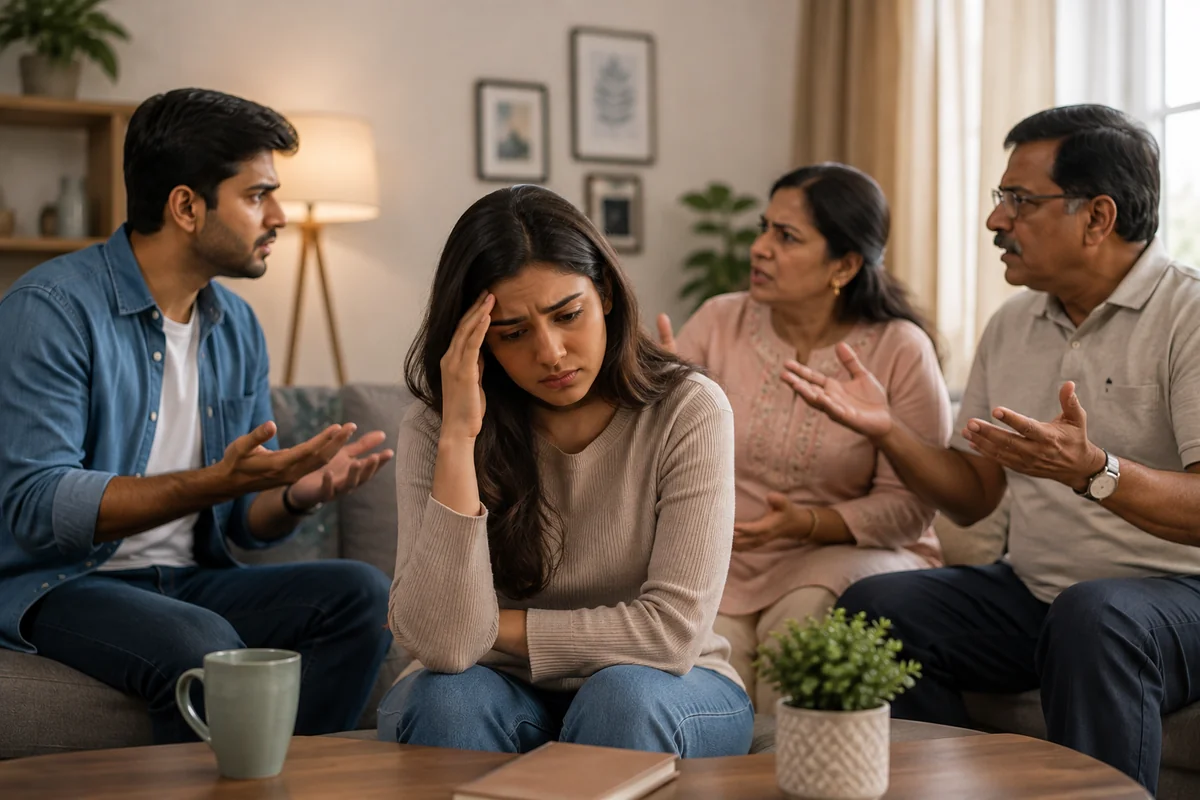
Actual incompatibility feels different in your body. It’s not boredom, it’s friction that never resolves. So notice which one you’re really in. If the same disagreements keep circling back without ever resolving, that points to something needing real attention.
The same is true if you sit down to dinner and realize you have nothing left to say to each other.
And if the boredom feels less like restlessness and more like a quiet loneliness even when you are together, that’s worth taking seriously too. Those are not the same as a cozy lull.
The roommate trap is the sneaky middle ground. This is where most long-term couples actually get stuck. Nobody’s fighting. Nobody’s leaving. You just quietly become excellent co-managers of a household. Bills, chores, logistics, the calendar. The playfulness gets eaten alive by the to-do list, and you run on autopilot. That’s not incompatibility. That’s neglect of the fun part, and it’s fixable.
Bored with the relationship, or bored with yourself? This is the question people brace against, and it’s the most important one. Sometimes we outsource our whole sense of aliveness to our partner. If you’ve dropped your hobbies, stopped seeing friends, or you’re burned out and running on empty, you’ll feel flat inside your relationship because you feel flat inside your own life. Before you blame the person across the table, ask honestly: how much of this heaviness am I carrying in on my own?
Why the Spark Fades (It’s Rarely What You Think)
When people come to me convinced the relationship has gone stale, the causes are almost always the same handful of things. And notice how many of them are things you both stopped doing, not things your partner became.
Predictability with zero mystery. You can predict every reaction, every story, every Friday night. Comfort is lovely, but the brain lights up around novelty, not sameness. When there’s nothing new to discover, the mind reads it as “boring,” when really it’s just fully mapped.
You quietly quit dating each other. Think about who you were at the start. You planned things. You made an effort. You were curious. Somewhere along the way that got filed under “unnecessary” because you already got the person. But effort was never the price of admission. It was the whole experience.
Unspoken resentment sitting under the surface. Avoided conversations don’t disappear, they just cool the room. When you’ve swallowed enough small frustrations, the connection goes flat and clinical. That numbness you’re calling boredom is sometimes just a pile of things nobody said out loud.
Making one person carry everything. If your partner is supposed to be your best friend, your co-parent, your therapist, and your only source of excitement all at once, they will inevitably feel like “not enough.” No single human can be an entire social world.
This is also why the messier searches make so much sense. “Bored in my relationship but I love him” isn’t a contradiction, it’s the roommate trap talking. “Why do I get tired of relationships so fast” often points to needing your own fuller life, not a different partner. And “do relationships get boring after 6 months” is really just noticing the exact moment the early chemistry starts settling into something steadier. None of it means you’re broken.
How to Actually Rebuild It (Not Just “Communicate More”)
Here’s the good news, and it’s backed by more than hope. You can bring this back on purpose.
Do something genuinely new together. Not another dinner at the usual place. Research on couples finds that sharing new and genuinely exciting activities together, not just pleasant familiar ones, measurably lifts how satisfied partners feel with each other. Take the class, go somewhere unfamiliar, try the thing that’s a little outside your comfort zone. Studies on self-expansion show that stretching into novel experiences as a couple can reawaken some of the closeness and charge of the early days.
Get your own life back. Reclaim a hobby. See your friends. Have things that are yours. When you bring a fuller, more interesting self home, you become interesting again to each other. Independence isn’t distance, it’s oxygen.
Change the tiny daily rituals. Phones away at dinner. Ask open-ended questions instead of “how was your day.” Try “what’s something you’ve been thinking about lately?” or “what would you love to do more of this year?” Small shifts crack the autopilot.
Bring back touch without an agenda. Hold hands. Hug for longer than feels efficient. Non-sexual affection with zero pressure rebuilds warmth, and it takes the performance anxiety out of physical closeness. A research review on desire in long-term relationships finds that desire is something couples actively tend and maintain, not a fuel tank that simply runs empty.
Have the honest conversation, framed as “us against the problem.” Not “you bore me.” Try something like: “I love us, and I’ve been missing the fun we used to have. Can we figure out how to bring more of that back together?” That’s collaboration, not accusation. And keep noticing the good out loud, because research on couples finds that feeling genuinely appreciated protects a relationship, while quietly feeling taken for granted wears it down over time.
None of this is a one-time fix, and that’s the whole point. Studies on relationship education find that partners who deliberately learn and keep practicing connection skills hold on to their satisfaction over the long haul.
If you want a quick, honest check-in on where your relationship actually stands right now, this is a good place to start.
Take the Free Relationship Checklist
What I Want You to Take With You
Here’s the thing I most want you to hold onto. Long-term passion is not something that just happens to you and then mysteriously stops happening. Once the automatic thrill of the beginning fades, the aliveness of a relationship becomes something two people rebuild, together, on purpose.
So if you feel bored in your marriage or your long-term relationship, that isn’t the ending. It’s the invitation. Love stops being only a feeling that washes over you and becomes a choice you keep making, and then make again. That’s not less romantic than the fireworks. Honestly, once you understand it, it’s more.
FAQ
Frequently Asked Questions
How do I know if I am just bored or if I have genuinely fallen out of love?
Boredom usually feels like restlessness sitting on top of real warmth and care, and it tends to lift when you add novelty and effort back in. Falling out of love feels more like indifference, where you no longer care what your partner thinks, feels, or does. Ask yourself if you still want to reach for them, or if you have simply stopped trying. If there is still tenderness underneath, you are almost certainly bored, not done.
Should I tell my partner that I feel bored in our relationship?
Yes, but frame it as something you want to fix together, not a verdict on them. Instead of "you bore me," try "I miss the fun we used to have and I want us to bring more of it back." Handled gently, this conversation usually pulls you closer rather than pushing them away, because it invites them onto your team instead of putting them on trial.
How long does a relationship rut usually last?
There is no fixed timeline, and a rut can last a few weeks or drag on for months if nobody addresses it. What actually shortens it is action, not waiting. Ruts tend to break once one of you introduces something new, restarts real effort, or opens up an honest conversation. Left completely untouched, they can quietly harden into the roommate dynamic, which is why doing something about it matters more than how long it has lasted.
Is it normal to feel bored but still deeply love my partner?
Completely normal, and it is one of the most common things people quietly worry about. Loving someone and feeling under-stimulated in the day to day are two different things living side by side. It usually means your bond is solid but the playfulness has gone on autopilot. That is a signal to add novelty and effort back in, not a sign your love has faded.