
Self
What Are Personal Boundaries? A Simple Guide to Setting Them Without Guilt
What personal boundaries are, the different types, why they are hard to set, and five simple steps to start setting them without guilt.
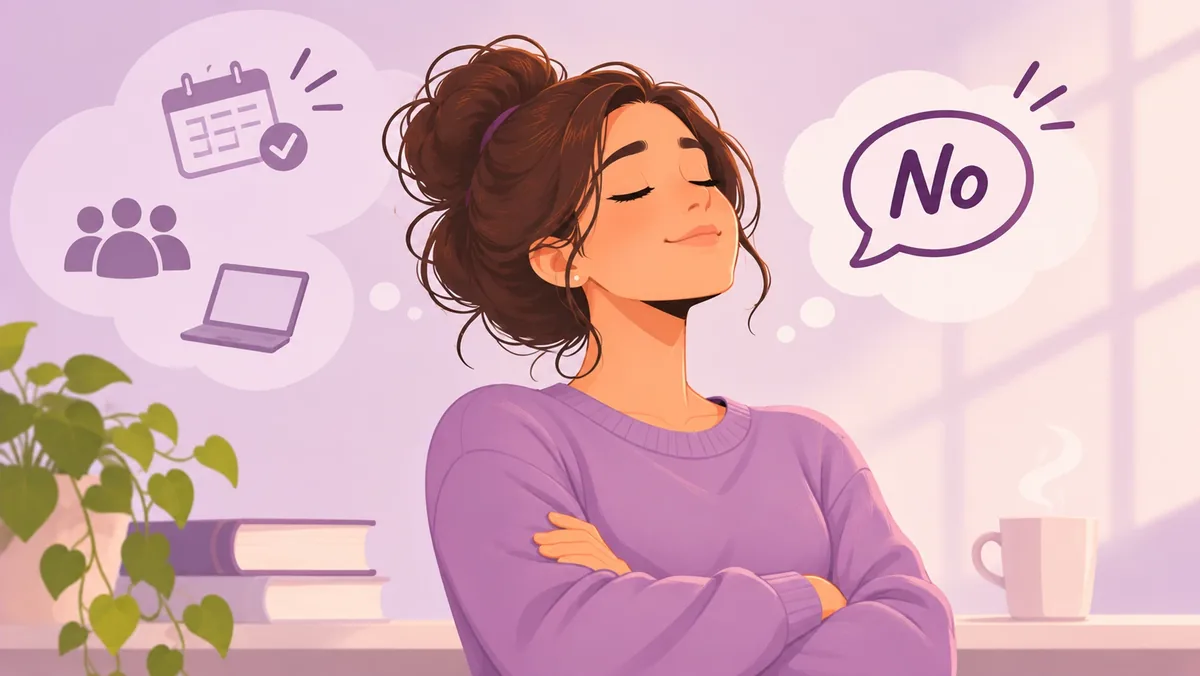
Personal boundaries are the limits you set around your time, energy, emotions, and responsibilities. They tell you, and the people around you, what you can reasonably manage and how you want to be treated. Boundaries are not about controlling others or caring less. They are what let you keep caring for people without consistently neglecting yourself.
Have you ever agreed to something when you were exhausted, simply because you didn’t want to disappoint someone? Perhaps you accepted extra work despite an already full plate, or said yes to a social plan when all you wanted was time to yourself.
For many people, saying no feels uncomfortable. They worry about seeming selfish, unhelpful, or difficult, and so they keep putting other people’s needs before their own. Learning to set boundaries is an important part of emotional well-being, and it starts with understanding what boundaries actually are.
What are personal boundaries?
Personal boundaries are the limits we set around our time, energy, emotions, and responsibilities. They help us recognise what we are comfortable with, what we can reasonably manage, and how we want to be treated.
Boundaries are not about controlling other people. You cannot make someone behave a certain way. A boundary is about communicating your needs and making choices that protect your well-being.
What are the different types of boundaries?
Boundaries show up in many parts of everyday life. Here are the most common types, with examples:
| Type of boundary | What it protects | What it can sound like |
|---|---|---|
| Time | How you spend your hours | ”I don’t check work messages after 8 p.m.” |
| Energy and workload | How much you take on | ”I can’t take on this extra task right now, as I need to finish my current work.” |
| Emotional | Your feelings, and not carrying everyone else’s | ”I care about how you feel, but I can’t fix this for you.” |
| Privacy and physical | Your space, body, and personal information | ”I need some time alone this evening.” |
| Respect | How people speak to and treat you | ”That comment made me uncomfortable. Please don’t say that again.” |
| Responsibility | What is yours to handle, and what isn’t | ”That’s a decision you’ll need to make. I’m happy to listen.” |
Time boundaries are often the hardest to protect, especially with work. The encouraging news is that switching off is a skill you can build: a meta-analysis of 30 studies found that interventions helped people mentally detach from work during their time off. For workplace-specific limits, see how to set boundaries at work.
Why is setting boundaries so difficult?
Fear of disappointing others. If you have learned to link being helpful with being valued, declining a request can feel like risking the relationship.
Guilt about your own needs. Some people believe a good friend, partner, colleague, or family member should always be available.
Past experiences. If expressing a different opinion once led to conflict, criticism, or rejection, setting a boundary can feel unsafe.
It is important to remember that discomfort does not automatically mean you are doing something wrong. Sometimes it simply means you are practising a skill that feels unfamiliar. If the hardest part for you is the word “no” itself, why saying no feels so hard, and how to do it kindly has ready-to-use phrases for work, friends, family, and children.
What happens without boundaries?
When we repeatedly agree to things we don’t have the time or energy for, stress builds. We may feel exhausted, frustrated, or even resentful towards the very people we are trying to support.
Someone who regularly takes on extra work may eventually feel unappreciated, while the people around them have no idea how overwhelmed they are, because their limits have never been said out loud.
Without boundaries, relationships can also become unbalanced. Healthy relationships leave room for both people’s needs rather than expecting one person to accommodate the other all the time. Research supports this distinction: caring for others is healthy, but focusing on others to the point of neglecting yourself is linked to psychological distress. If that pattern sounds familiar, the hidden cost of always putting others first explores it further.
How can you start setting healthier boundaries?
1. Identify your limits
Notice situations where you feel overwhelmed, uncomfortable, or resentful. These feelings are often clues to where a boundary is needed.
2. Pause before agreeing
You don’t have to respond to every request immediately. Try: “Let me check my schedule and get back to you.” This gives you time to consider what you can realistically manage.
3. Communicate clearly and respectfully
You can be kind without a long explanation. For example: “I won’t be able to take on this additional task right now, as I need to finish my current work.”
4. Expect some discomfort
You may feel guilty even when your decision is reasonable. Instead of treating guilt as proof you made the wrong choice, ask yourself: Have I acted unfairly, or have I simply acknowledged my own limits?
5. Start small
You don’t need to change every relationship at once. Begin with a manageable situation, such as declining one request when you genuinely don’t have the capacity. If people-pleasing runs deep for you, why you keep people-pleasing even when it hurts you looks at where the pattern comes from.
Do boundaries make relationships worse?
No. Setting boundaries does not mean becoming distant or uncaring. Clear communication often makes relationships more honest and more sustainable.
That said, not everyone will respond positively to a new boundary. You cannot control another person’s reaction, but you can communicate respectfully and stay mindful of your own needs.
If expressing a boundary could put you at risk of harm or retaliation, seek appropriate support and prioritise your safety. If setting limits feels impossible on your own, talking it through with a psychologist, such as one at Crink, can help.
Making room for yourself
You can care about people and still say no. You can be supportive without being available all the time. And you can value a relationship without agreeing to everything that is asked of you.
Healthy boundaries are not a rejection of others. They are a way of making room for your own needs alongside theirs.
The next time you feel pressured to say yes, pause and ask yourself: “Am I agreeing because I genuinely want to, or because I’m afraid of how someone might react if I say no?”
That small moment of reflection can be the beginning of a healthier relationship with yourself and the people around you.
FAQ
Frequently Asked Questions
What are personal boundaries?
Personal boundaries are the limits you set around your time, energy, emotions, and responsibilities. They help you recognise what you are comfortable with, what you can reasonably manage, and how you want to be treated. Boundaries are not about controlling other people; they are about communicating your needs and making choices that protect your well-being.
What are examples of healthy boundaries?
Declining an extra task when your workload is already full, asking for privacy when you need time alone, not answering work messages after a set hour, telling someone that a particular comment makes you uncomfortable, and saying you need time to think before agreeing to a request are all examples of healthy boundaries.
What are the different types of boundaries?
Common types include time boundaries (how you spend your hours), energy boundaries (how much you take on), emotional boundaries (not carrying responsibility for everyone's feelings), privacy and physical boundaries (your space, body, and personal information), and responsibility boundaries (what is yours to handle and what is not).
Why do I feel guilty setting boundaries?
If you learned to link being helpful with being valued, declining a request can feel like risking a relationship. Guilt does not automatically mean you did something wrong. Ask yourself whether you acted unfairly, or simply acknowledged your own limits. Often the discomfort just means you are practising an unfamiliar skill.
What if someone reacts badly to my boundary?
Not everyone will respond positively at first, and you cannot control another person's reaction. You can communicate respectfully and stay mindful of your own needs. If setting a boundary could put you at risk of harm or retaliation, seek appropriate support and put your safety first.