Self
Tired of Needing Approval? How to Finally Trust Yourself
Learn how to stop seeking validation and needing approval from others, with concrete steps to build self-trust at work, in relationships, and on social media.

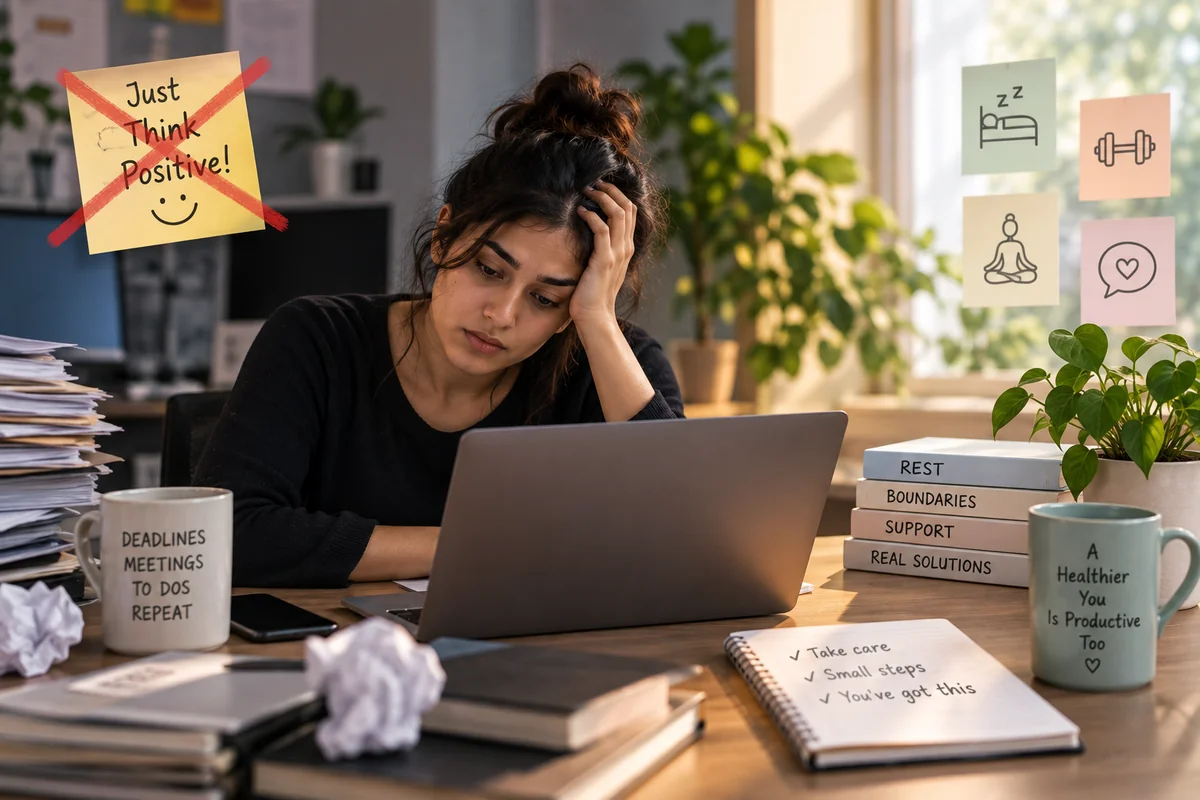
Here is the reframe that changes everything: the goal was never to stop caring what people think. Nobody who lives among other humans pulls that off, and honestly, you would not want to. The real work is to stop outsourcing your worth, to stop shipping the final say on whether you are okay out to other people and waiting for them to send back a verdict.
Because that is what validation-seeking behavior actually is. It is the habit of treating someone else’s reaction as the deciding vote on your value. Every decision, every outfit, every career move, every offhand text needs a green light from somebody before it feels “right.” And I watch so many capable, sharp adults run their whole lives this way, exhausted, waiting for a nod that never quite settles the question.
When people say “stop seeking validation from others,” here is what it does not mean: it does not mean ignoring feedback, going it alone, or pretending you do not need people. Feedback is useful. Connection is oxygen. What it means is moving the ultimate source of your worth back home to yourself, so that other people’s opinions become information you consider rather than a sentence you await.
Let me show you why the hook runs so deep, where it quietly runs your life, how to spot it, and what to actually do.
Why approval got its hooks in you
Nobody wakes up one day and decides to hand their self-worth to a committee. This is learned, and it usually made sense at the time.
1. You learned love had to be earned. If praise as a child arrived only when you performed, achieved, or made yourself easy, you learned early that worth is conditional. Do well, get warmth. Slip up, feel the chill. That wiring does not vanish in adulthood. It just relocates to your boss, your partner, your group chat.
2. Social platforms trained your reward system. Likes and comments deliver applause on a timer, and your brain learns fast. Post, refresh, wait for the little hit. Over time this teaches the nervous system to expect immediate, measurable approval for existing. That is a big part of why so many people struggle to know how to stop seeking validation on social media: the machine is built to keep you refreshing.
3. Approval became your safety shield. For a lot of people, chasing approval is a quiet strategy to avoid rejection and conflict. If everyone approves, nobody leaves, nobody is angry, nobody rejects you. It feels like safety. But it is expensive, because you slowly disappear to keep the peace.
And this is not a harmless quirk. Research on the need for social approval finds it is a real risk factor for major depression, not just a personality quirk. When your worth is rented rather than owned, the rent comes due.
Where it quietly runs your life
This is where the generic advice tends to stop, but the pattern lives in specific rooms. Here is what it looks like, and what shifts.
In your relationship, with your partner. You need constant reassurance. “Are we okay?” three times a day. You read tone into a short reply and spiral. Sometimes it flips outward and you find yourself seeking validation outside the relationship, fishing for attention elsewhere to top up a tank your partner cannot fill anyway. The truth: research on excessive reassurance seeking links the constant need for approval to depression and, over time, to the very rejection it fears. The shift for how to stop seeking validation from your partner is to let one worry sit for a few hours before you voice it, and notice it usually settles on its own.
With men. For some, the question of how to stop seeking validation from men shows up as shape-shifting around male attention, dimming your opinions, laughing at things you do not find funny, measuring your worth by whether he texts back. The shift is to keep one non-negotiable opinion intact in the conversation and watch what happens when you do not soften it.
With women. How to stop seeking validation from women often looks like comparison and belonging anxiety, needing to be included, liked, approved of by the group. It can quietly become the habit of measuring your insides against everyone else’s outsides. The shift is to notice the comparison and ask what you actually want, separate from the pack.
On social media. You post, then hover over the numbers, feeling flatter with every low-like photo. The shift is to post and then close the app for an hour, breaking the refresh-reward loop on purpose.
At work. Learning how to stop seeking external validation at work usually means untangling from over-reliance on a manager’s approval, redoing solid work because they did not gush, unable to judge your own output as “good” without a pat on the head. The shift is to form your own assessment of a task before you send it up, and then compare, rather than waiting to be told what to think of your own work.
Stealth signs you’re hooked on approval
Some signs are loud. These are the quiet ones I look for.
1. You over-explain simple choices. You cannot just say “I’d rather not come.” You build a five-sentence legal defense. If you catch yourself justifying low-stakes decisions, you are seeking permission you do not need.
2. Your opinion changes with the room. You genuinely liked the film until someone frowned, and now you are lukewarm on it too. Needing validation from other people can be so automatic you do not notice your own view dissolving.
3. Mild disappointment triggers panic. Someone seems slightly let down and your whole system floods. A flat “okay” from a friend ruins your afternoon.
4. You can’t celebrate a win alone. You get good news and it does not feel real until you have told someone and they have reacted. The win is on hold until it is witnessed and approved.
Studies find that chronically seeking approval and reassurance tends to feed a cycle of negative feedback seeking that deepens low mood, which is exactly why these small signs matter before they compound.
Steps to build self-trust that actually holds
This is the concrete part. Small, repeatable, doable.
1. Pause before you share. Made a decision or got a win? Sit with it for a set stretch of time before telling anyone. An hour, a day. The point is to feel your own reaction fully before it gets colored by someone else’s. You are teaching yourself your opinion counts first.
2. Say the self-validation out loud. Do not just think “that was good.” Say it. “I handled that call well.” “I made a fair call.” Spoken, in plain words. It feels awkward, which is exactly why it works, because you are replacing outside praise with an internal source. And notice the reflex of brushing off a compliment the second it lands, then practice letting one sit instead.
3. Get comfortable being disliked. Someone’s opinion of you is filtered through their history, their mood, their bad day, their own insecurities. It is data about them, not a measurement of your objective worth. Decades of research treat this approval-dependence as a genuine vulnerability that raises the risk of depression when relationships wobble, so letting some disapproval just exist without fixing it is genuine protective work.
4. Make small decisions entirely alone. Where to eat, what to wear, which route to take. No polling, no group chat consult. Low stakes on purpose, because you are rebuilding gut-trust one tiny call at a time.
5. Separate kindness from people-pleasing. You can be warm and hold a boundary. Caring about someone does not require abandoning yourself. Watch for the pattern of saying yes when everything in you wants to say no, and let that be your signal that kindness has slid into approval-buying. Studies show that when your sense of worth is hooked to others’ approval, shame and low mood tend to follow, so this boundary is not selfish, it is maintenance.
A quick honesty check on “healthy feedback” vs approval-dependence
Here is the line, because it matters. Healthy feedback is something you seek out, weigh, and can disagree with. You ask, you consider, you decide. Approval-dependence is when you need the answer to be yes to feel okay, when a no destabilizes you, when you cannot function without the nod. Feedback informs you. Approval-dependence controls you. Same input, completely different relationship to it.
Know Yourself: Take the Free Self-Efficacy Assessment
Start with one held decision
None of this is a switch you flip. It is a practice, and the aim is to loosen the grip, not to reach some enlightened state where you never want approval again. Wanting to be liked is human. Being run by it is the part we are changing.
So here is the one concrete shift: this week, make one decision and keep it to yourself until it is done. Do not float it, do not poll, do not seek the pre-approval. Sit in the discomfort of trusting your own call. That single held decision is the whole thing in miniature.
And if this approval-dependence is fueling real anxiety or depression, or hollowing out your relationships to the point where you barely know what you want anymore, that is worth support. A good therapist can help you trace where the wiring started and rebuild the source of your worth on steadier ground. Reaching out for that is not more approval-seeking. It is the opposite.
FAQ
Frequently Asked Questions
Why do I constantly seek validation from other people?
It is usually learned, not a flaw. If praise in childhood arrived only when you performed or achieved, you learned worth is conditional. Social platforms and a subconscious desire to avoid rejection then reinforce the habit. Seeking approval once kept you safe, which is why it feels so automatic now.
Is it bad to want validation at all?
No. Wanting to be liked, seen, and appreciated is a normal human need, and useful feedback helps you grow. The problem is not wanting approval, it is needing it to feel okay about yourself. The aim is to loosen the grip so others' opinions inform you rather than control you.
How do I actually validate myself?
Start concrete and out loud. After a decision or a win, name it plainly to yourself first: 'I handled that well.' Sit with a choice before sharing it, and make small everyday decisions entirely alone to rebuild trust in your own judgment. Spoken self-validation feels awkward at first, which is a sign it is doing real work.
What is the difference between healthy feedback and needing approval?
Healthy feedback is something you seek out, weigh, and can disagree with; it informs your decision but does not control you. Approval-dependence is when you need the answer to be yes to feel okay, and a no destabilizes you. Same input, completely different relationship to it. One leaves you free, the other leaves you controlled.