
Parenting
It's normal to feel lost after having a baby. Nobody just told you why.
Explore how motherhood can lead to burnout, guilt, and identity loss. Learn why many mothers seek parenting support and emotional counselling.
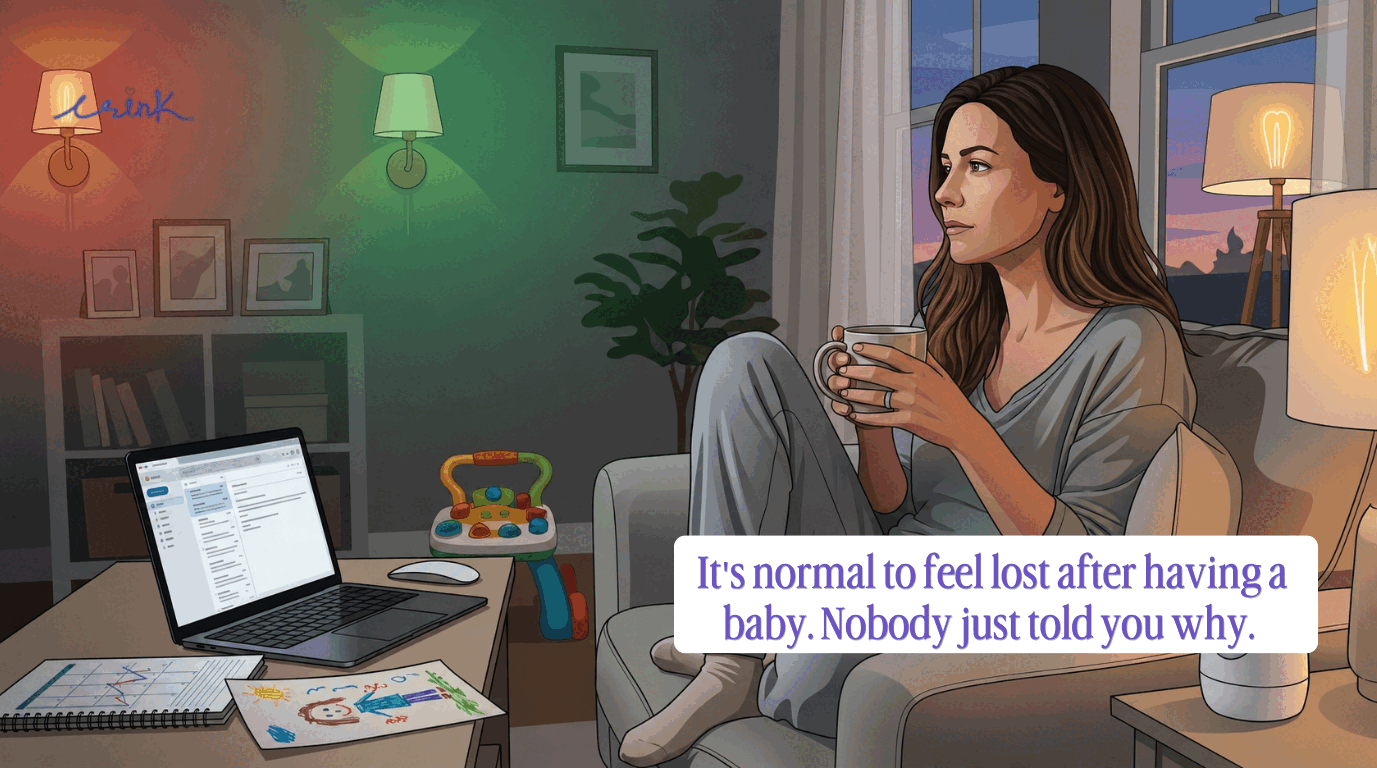
You are answering emails while mentally keeping track of everything else. A school form you forgot to sign. Dinner plans. Tomorrow’s meeting.
You are functioning. You are getting through the day. Most people would say you are handling it well.
But somewhere between taking care of everyone else and meeting every deadline, a thought quietly crosses your mind: what do I actually want right now?
This is not always burnout. Sometimes, it is quieter than that. It is the slow experience of becoming so responsible for everyone else’s life that you slowly lose touch with your own.
How Identity Loss Happens Quietly
You did not lose yourself all at once.
There was no single moment. No dramatic breaking point you could point to and say, there, that is where it happened.
It happened in increments. It happened the morning you skipped your run because the baby was unsettled. It happened when you stopped making plans with friends who knew the version of you that had opinions about films and time to linger over dinner.
Each choice, on its own, made complete sense. Together, they added up to something you are only now starting to feel.
Psychologists have a word for one version of this: role engulfment. It is what happens when one role, mother, caregiver, the person who keeps everything running, gradually occupies the space where a fuller identity used to live.
The Guilt That Never Fully Lifts
You feel guilty at work because part of your mind is still with your child. And when you are at home, part of you is still thinking about work.
The guilt follows you into both spaces. It never fully switches off. Over time, it starts shaping the way you treat yourself.
Your needs begin to feel less important. Rest starts to feel like something you have to earn. Choosing yourself comes with guilt, while choosing everyone else feels safer and more responsible.
That is why many mothers first notice this strain through quiet emotional exhaustion, the same kind of tension that can overlap with postpartum depression symptoms or the hidden stress inside the top parenting challenges parents experience.
What Actually Shifts
Over time, the changes become strangely practical.
- You stop making time for things that once felt like you.
- Your playlists stay the same because you no longer go looking for new music.
- You realize you have not had an uninterrupted conversation with a friend in months.
- Even silence turns into planning time instead of rest.
There is also a name for the broader transition: matrescence, the psychological, neurological, and identity-level transformation of becoming a mother. It is, researchers argue, as seismic as adolescence.
Nobody really prepares women for that level of change. Nobody gives them much room to navigate it either.
Why Time Off Does Not Always Help
People often respond to mothers’ exhaustion with simple advice: take a break, sleep more, book the trip, do something for yourself.
Those things can help, but they do not always reach the real problem. Sometimes the exhaustion does not come from being busy. It comes from spending so many years being needed by everyone else that you become disconnected from the parts of yourself that existed outside of responsibility.
So when you finally do get time alone, it can feel strangely unfamiliar. Not because you do not appreciate the break, but because your own preferences no longer feel immediate or obvious.
What Reconnecting With Yourself Can Look Like
This is not only about self-care. It is about rebuilding a relationship with yourself, slowly, intentionally, and without guilt attached to it.
- Notice how often you dismiss your own needs automatically.
- Ask yourself what you need, not just what everyone else needs from you.
- Ask what feels meaningful to you now, not only before motherhood.
- Seek spaces where you do not have to take care of everyone else first.
Support matters here. Sometimes that support looks like slowing down, and sometimes it looks like reaching for more structured help through an online parenting workshop.
Take the free Postpartum Assessment
Love and Loss Can Coexist
The goal is not to become the person you were before motherhood. The real work is learning how to make space for all the parts of you to exist together: the mother, the professional, and the person underneath both roles.
You are allowed to love your children completely and also grieve the parts of yourself that got quietly set aside in the process.
Those two things can coexist. The love is real. So is the loss.
If this felt familiar, you are not alone. Motherhood can feel overwhelming, especially when you are carrying everyone else’s needs while quietly ignoring your own.
FAQ
Frequently asked questions
What is the core message of "It's normal to feel lost after having a baby. Nobody just told you why."?
Explore how motherhood can lead to burnout, guilt, and identity loss. The post explains the issue in concrete, recognizable terms so readers can tell the difference between a difficult phase and something that deserves real attention.
Why does this issue matter according to the article?
According to the article, this matters because early recognition, informed support, and compassionate responses can change outcomes for the person affected and the people around them.
What practical takeaway does the article leave readers with?
The practical takeaway is to learn the signs, take symptoms seriously, and reach for timely professional or practical support rather than waiting for fear, exhaustion, or shame to deepen.
Updated on May 14, 2026